
Dinner / Korean
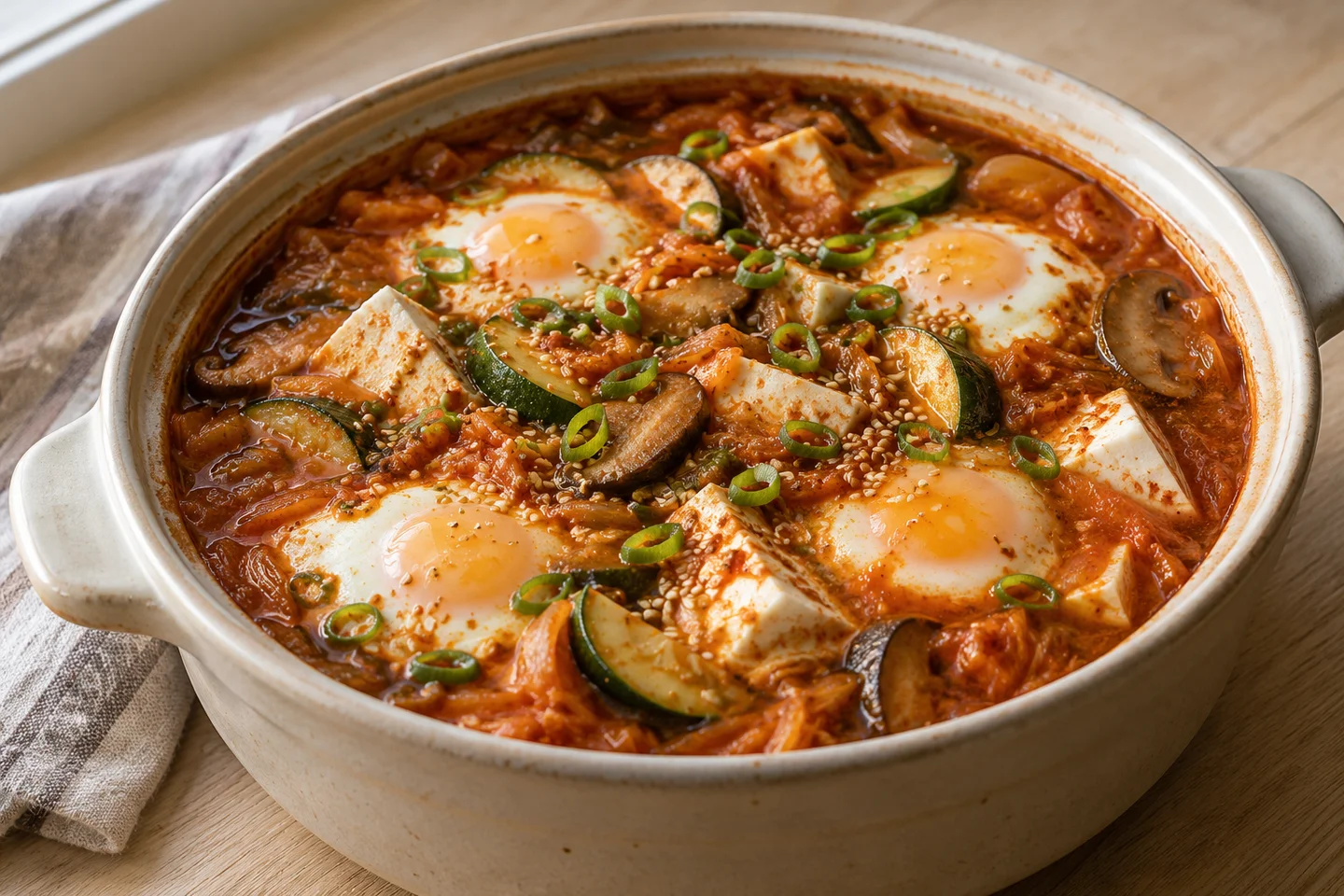
Mushroom-Zucchini Sundubu Jjigae
A cozy Korean soft tofu stew with mushrooms, zucchini, and a spicy-sweet gochujang broth finished with scallions and sesame.
By Vegetarian Recipes Kitchen · Updated
- Prep
- 15 minutes
- Cook
- 25 minutes
- Total
- 40 minutes
- Serves
- 4
Gather your ingredients
Everything you need.
Allergen notes
- Contains egg.
- Contains soy.
- Contains sesame.
- Yeast extracts, stocks, seasoning blends and fermented sauces can contain additional allergens such as cereals, celery or sulphites; check the actual product labels.
- Check all packaged ingredients and substitutions for allergens; vegetarian or vegan labels do not establish allergen safety.
Check product labels and any substitutions; packaged ingredients can introduce additional allergens.
Let's cook
Step by delicious step.
Tap a step number to mark it complete as you cook.
Heat the oil in a soup pot over medium heat. Add the onion and cook until softened, 3 to 4 minutes.
Stir in the garlic and ginger for 30 seconds, then add the mushrooms, zucchini, and kimchi. Cook until the mushrooms soften, about 4 minutes.
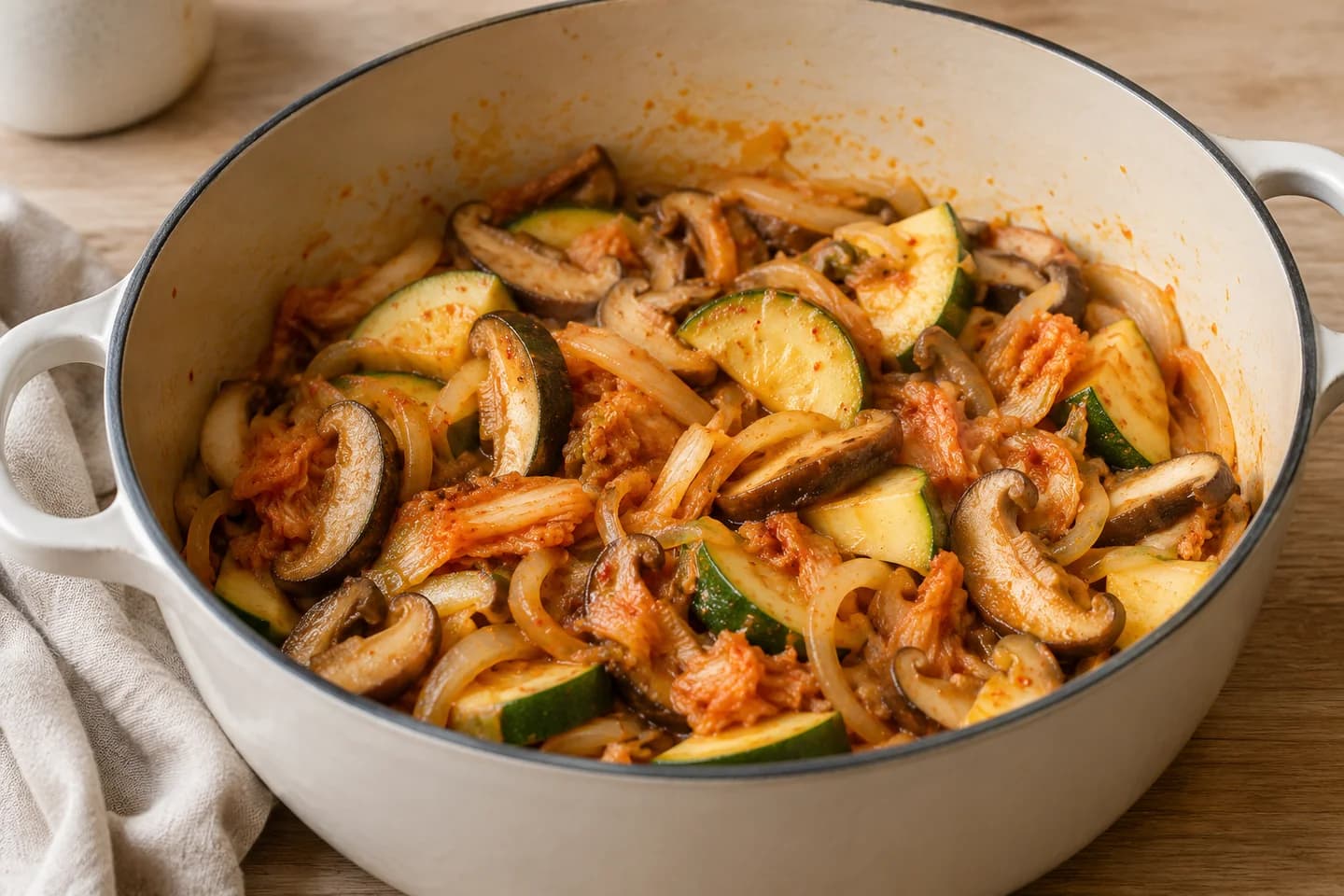
Stir in the gochujang and gochugaru, coating the vegetables. Pour in the broth and tamari and bring to a simmer.
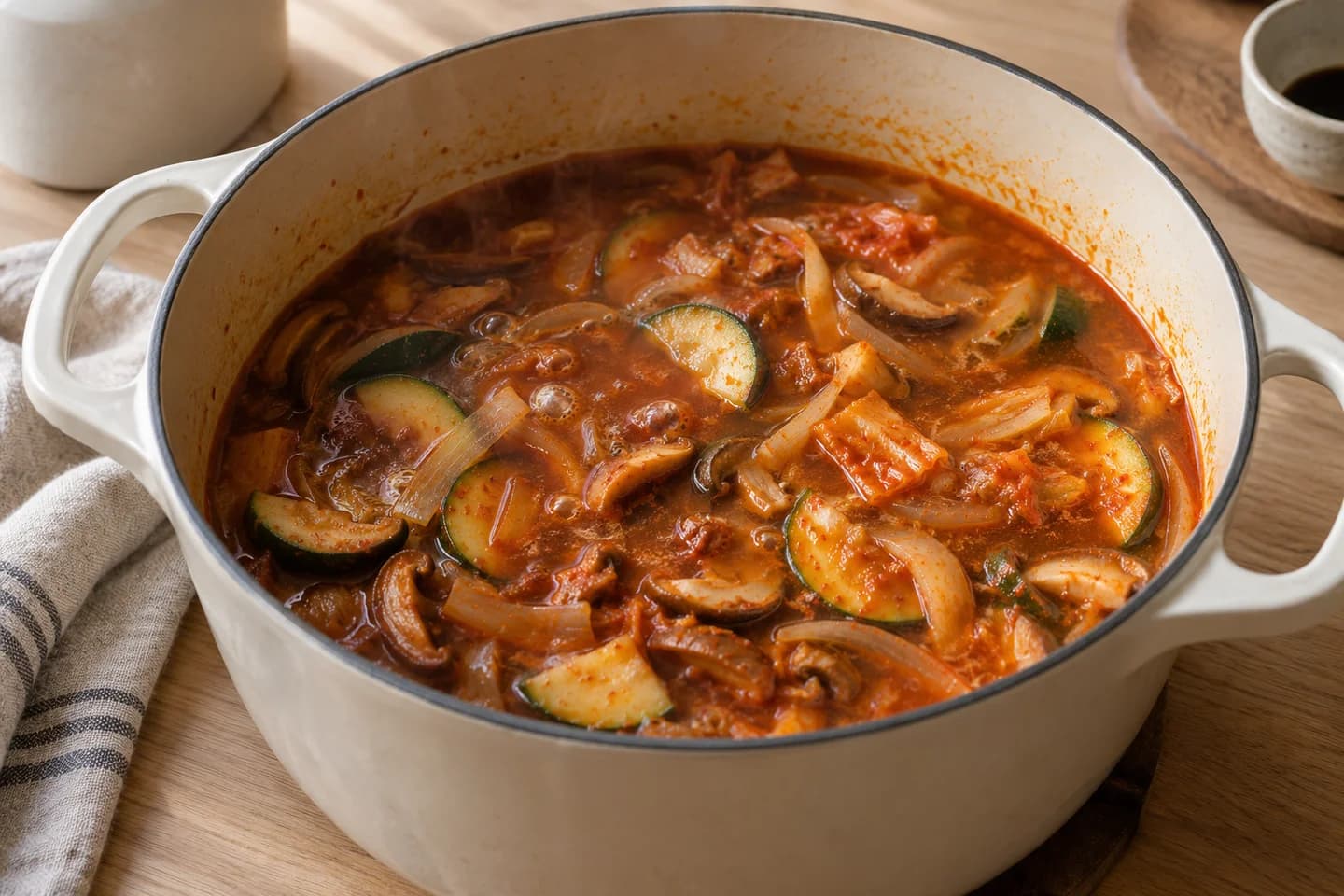
Simmer the broth for 8 to 10 minutes. Gently spoon the tofu into the pot in large chunks and simmer 5 minutes more. Add soft tofu in large pieces and stir gently so the curds remain intact rather than dissolving into the broth.
If using eggs, crack one into each quadrant of the pot, cover, and cook until the whites set, about 3 minutes.
Drizzle in the sesame oil and finish with scallions and sesame seeds. Serve hot with rice if desired.
0 of 6 steps complete
A little kitchen know-how
- Use vegetarian kimchi to keep the stew fully meat-free.
- For extra depth, add a teaspoon of doenjang with the gochujang.
- Keep the tofu chunks large so they stay silky.
Make it yours & keep it well
Omit optional eggs for an egg-free stew and use vegetarian kimchi without fish or shrimp ingredients.
Storage: Cool promptly in shallow portions and refrigerate covered. Eat within 48 hours or freeze suitable extras promptly. Reheat cooked leftovers only once until steaming hot throughout. Keep any rice accompaniment separately and follow its shorter storage limit. Warm the stew gently to preserve tofu pieces.
For cooling and reheating, follow the Food Standards Agency’s leftover guidance. Rice has a shorter refrigerated storage limit, as described in its recipe notes.
Estimated nutrition per serving
340 kcal · Protein 19 g · Carbohydrates 18 g · Fat 21 g
Approximate figures; brands, portions and substitutions change the result.
Good things to know
Can I make this less spicy?
Reduce the gochugaru to 1 teaspoon and add an extra tablespoon of broth to mellow the heat.
What should I serve with sundubu?
Steamed rice and quick cucumber salad make the meal feel complete.
How can I reduce the heat?
Use less gochugaru at first, taste the kimchi and gochujang, and offer extra chilli at the table rather than adding it all to the pot.
Keep the good food coming.
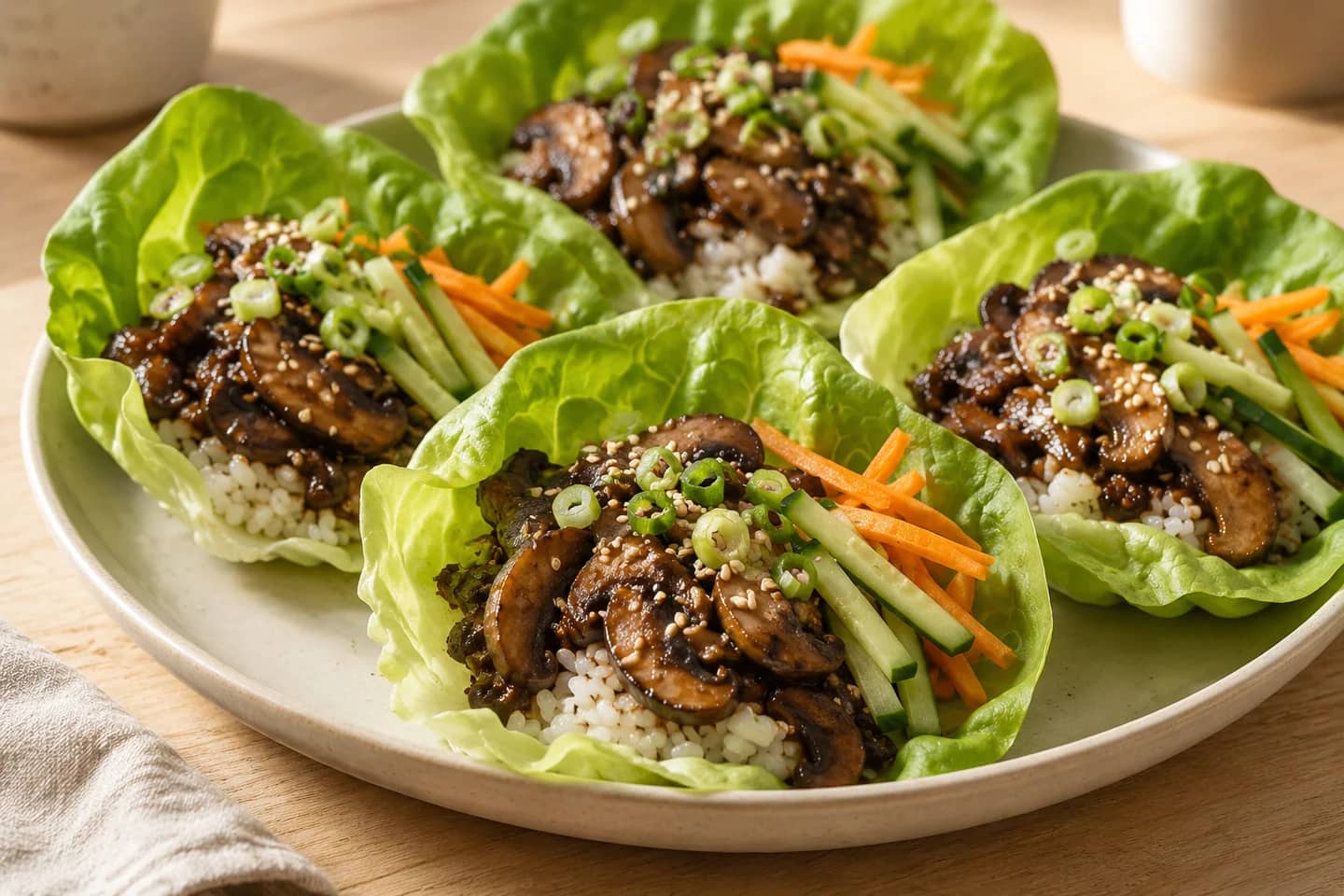
Bulgogi-Style Mushroom Lettuce Cups
Savory-sweet bulgogi mushrooms, crunchy vegetables, and sesame rice tucked into crisp lettuce cups for a fast Korean-inspired meal.
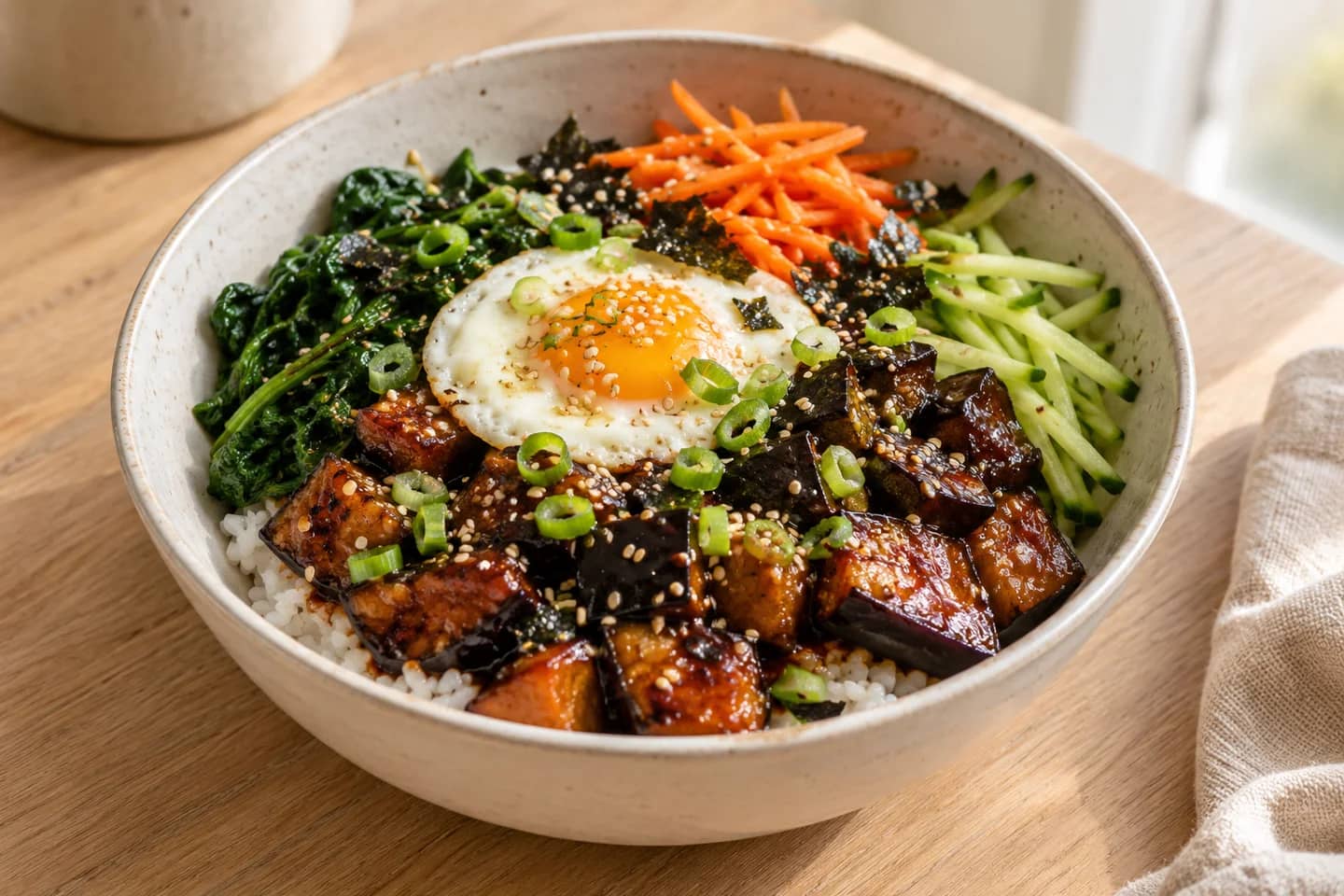
Gochujang-Glazed Eggplant Bibimbap Bowls
Roasted eggplant cubes tossed in a sweet-spicy gochujang glaze served over rice with crisp vegetables and jammy eggs.
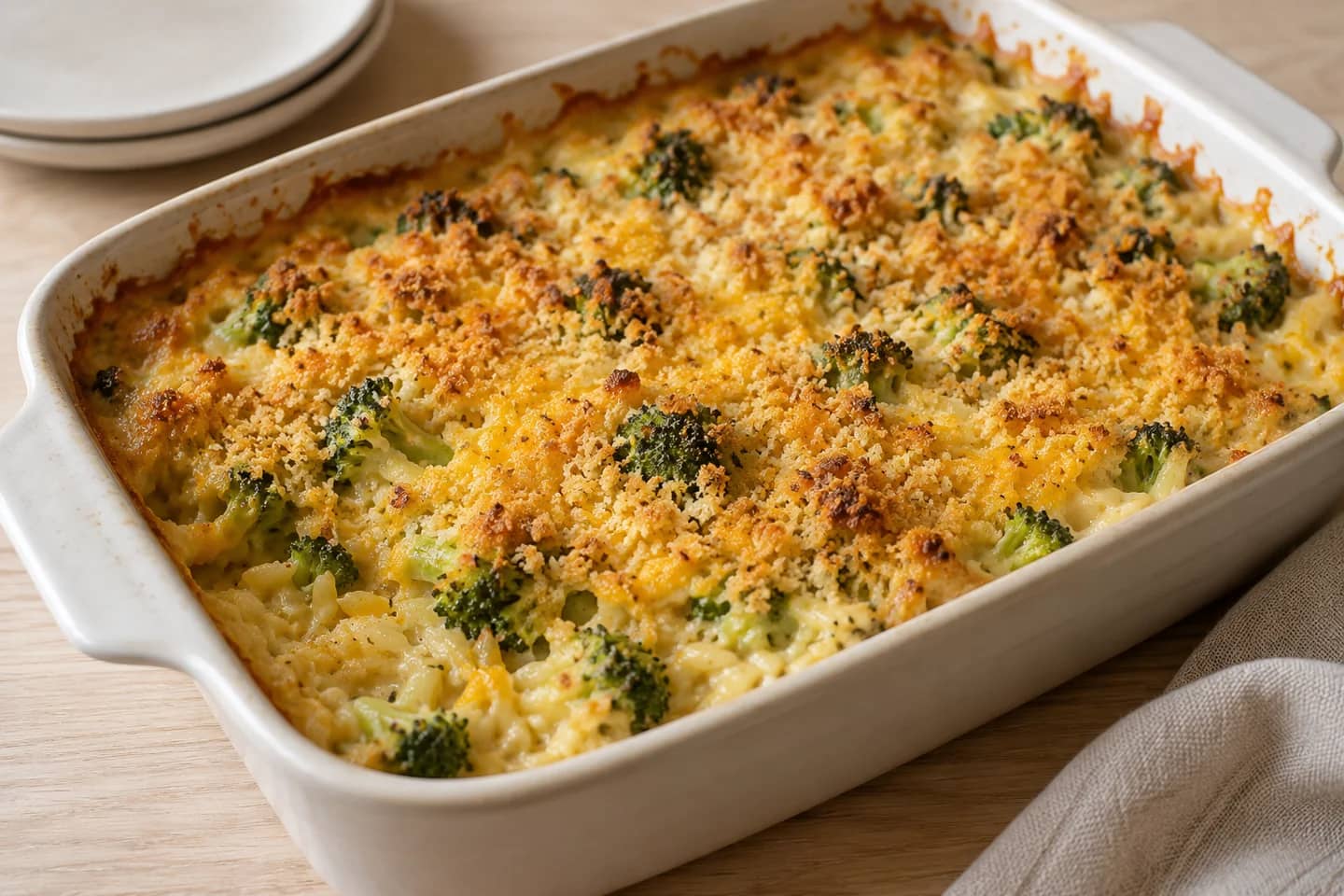
Broccoli Cheddar Orzo Casserole
Creamy baked orzo with broccoli, sharp vegetarian cheddar, and a crisp breadcrumb topping for a comforting vegetarian dinner.