
Dinner / Korean
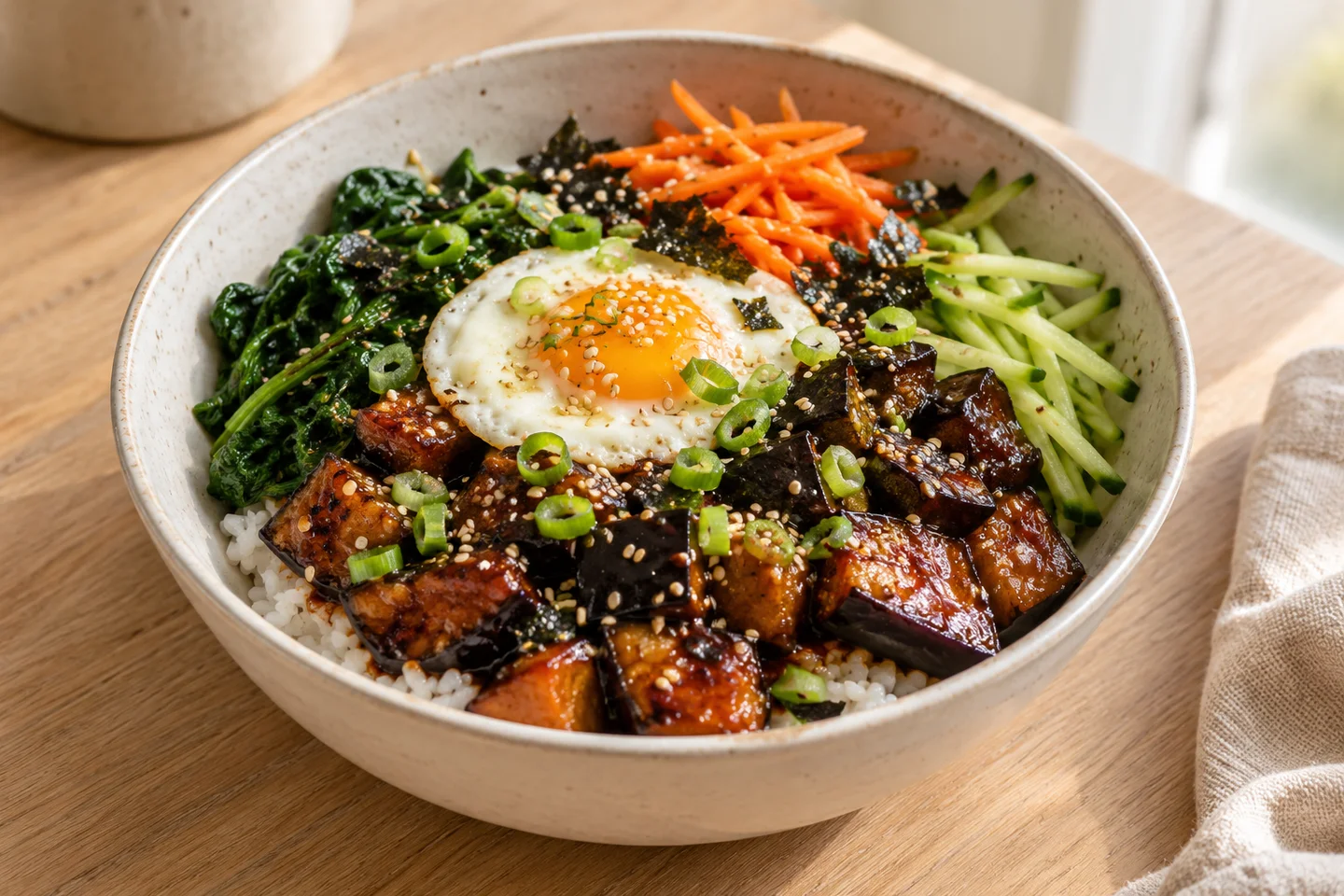
Gochujang-Glazed Eggplant Bibimbap Bowls
Roasted eggplant cubes tossed in a sweet-spicy gochujang glaze served over rice with crisp vegetables and jammy eggs.
By Vegetarian Recipes Kitchen · Updated
- Prep
- 20 minutes
- Cook
- 30 minutes
- Total
- 50 minutes
- Serves
- 4
Gather your ingredients
Everything you need.
Allergen notes
- Contains egg.
- Contains soy.
- Contains sesame.
- Yeast extracts, stocks, seasoning blends and fermented sauces can contain additional allergens such as cereals, celery or sulphites; check the actual product labels.
- Check all packaged ingredients and substitutions for allergens; vegetarian or vegan labels do not establish allergen safety.
Check product labels and any substitutions; packaged ingredients can introduce additional allergens.
Let's cook
Step by delicious step.
Tap a step number to mark it complete as you cook.
Combine the rice, water, and a pinch of salt in a saucepan. Bring to a boil, cover, reduce to low, and simmer for 15 minutes. Remove from heat and steam for 10 minutes.
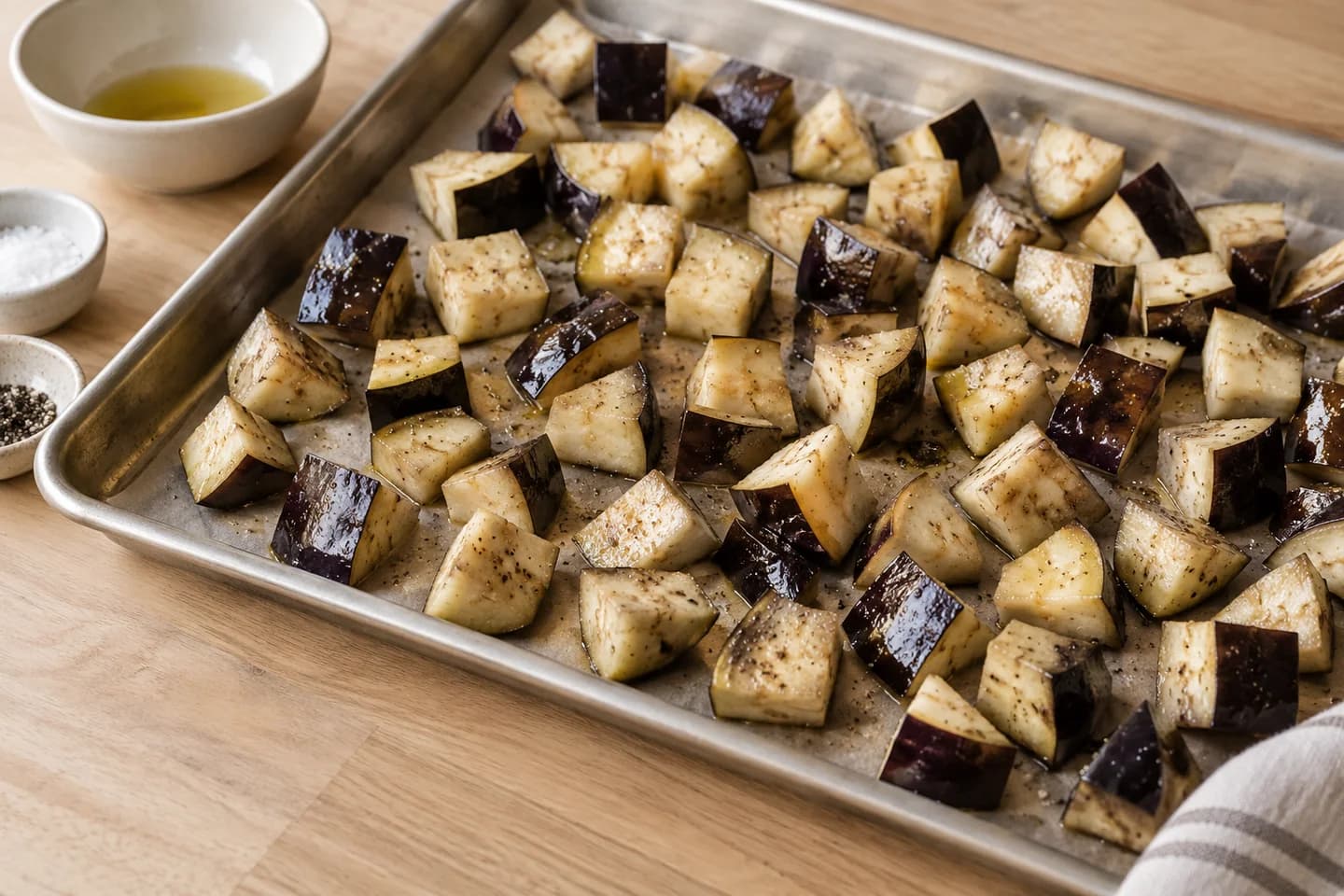
Heat the oven to 425°F (220°C). Toss the eggplant with the avocado oil, 1/4 teaspoon of the salt, and the black pepper. Spread on a sheet pan and roast until caramelized, 20 to 22 minutes. Turn the eggplant when its underside browns and test for a creamy centre before adding glaze.
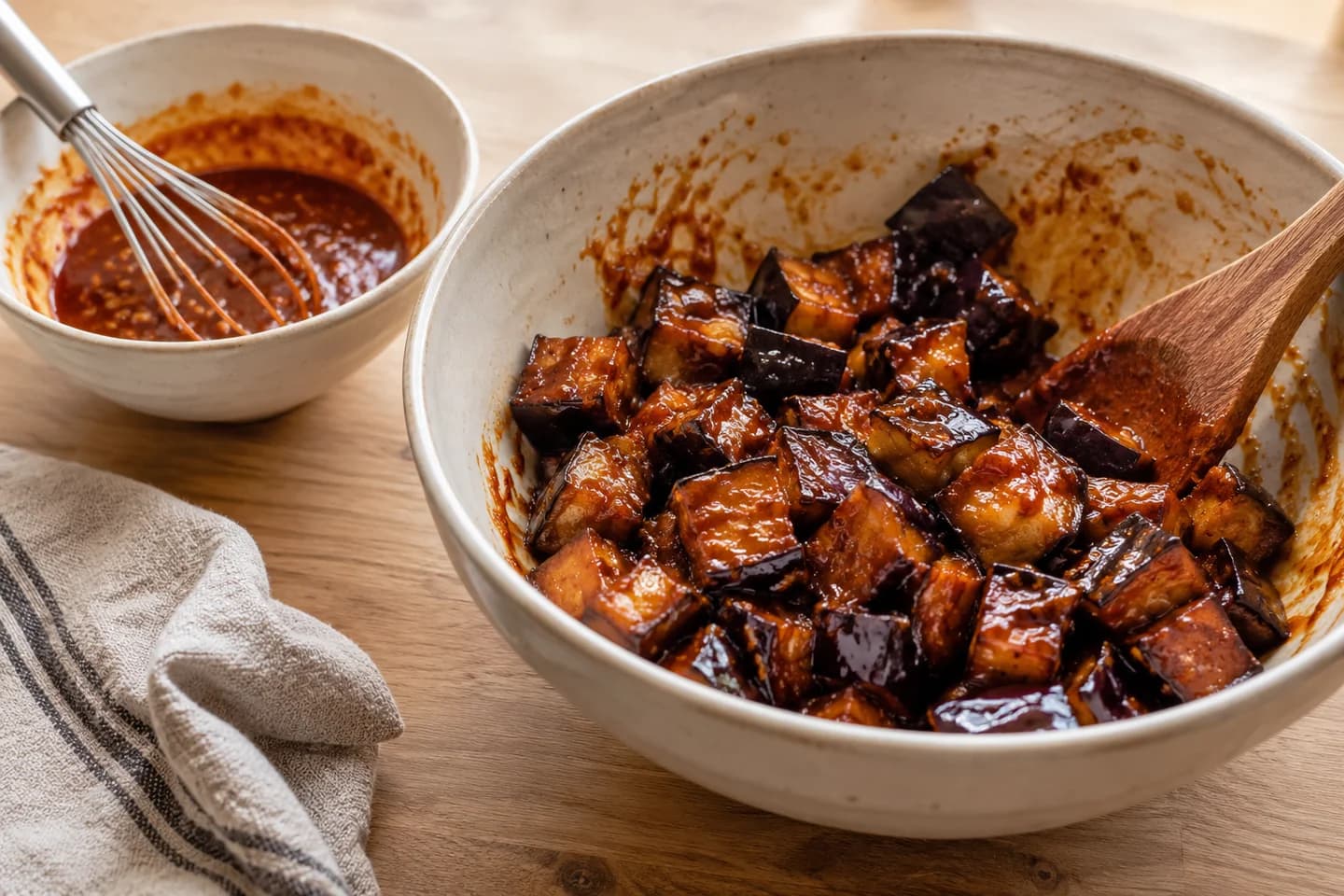
Whisk together the gochujang, tamari, sesame oil, rice vinegar, maple syrup, ginger, and garlic. Toss the hot eggplant with the glaze until glossy.
Wilt the spinach in a skillet with a splash of water and a pinch of salt. Remove to a plate.
Cook the eggs in the same skillet to your liking, keeping the yolks jammy if possible.
Build bowls with rice, spinach, carrots, cucumber, and glazed eggplant. Top each with an egg, sesame seeds, scallions, and seaweed if using.
0 of 6 steps complete
A little kitchen know-how
- Roast the eggplant on the top rack for deeper caramelization.
- Warm the bowls before serving to keep the rice fluffy and the glaze saucy.
- Swap in fried tofu for the egg if you want extra protein without adding more eggs.
Make it yours & keep it well
Omit the egg and add browned tofu for an egg-free bowl; check gochujang and tamari labels.
Storage: Cool cooked rice promptly, ideally within 1 hour, and refrigerate. Eat within 24 hours, or freeze promptly for longer storage. Reheat only once until steaming hot throughout. Keep rice, glazed eggplant and raw vegetables separately. Cook eggs fresh when practical.
For cooling and reheating, follow the Food Standards Agency’s leftover guidance. Rice has a shorter refrigerated storage limit, as described in its recipe notes.
Estimated nutrition per serving
520 kcal · Protein 17 g · Carbohydrates 74 g · Fat 18 g
Approximate figures; brands, portions and substitutions change the result.
Good things to know
Can I make this bowl ahead for meal prep?
Yes. Cool the rice promptly, ideally within 1 hour, and refrigerate the components separately. Eat the rice within 24 hours and reheat only once until steaming hot. Cook the eggs fresh before serving.
Is there a milder sauce option?
Use 2 tablespoons gochujang and add 1 tablespoon tomato paste for a gentler heat.
Why is the eggplant still spongy?
It needs enough cooking to collapse inside. Continue roasting until a fork slides through easily, covering if the outside is already dark.
Keep the good food coming.
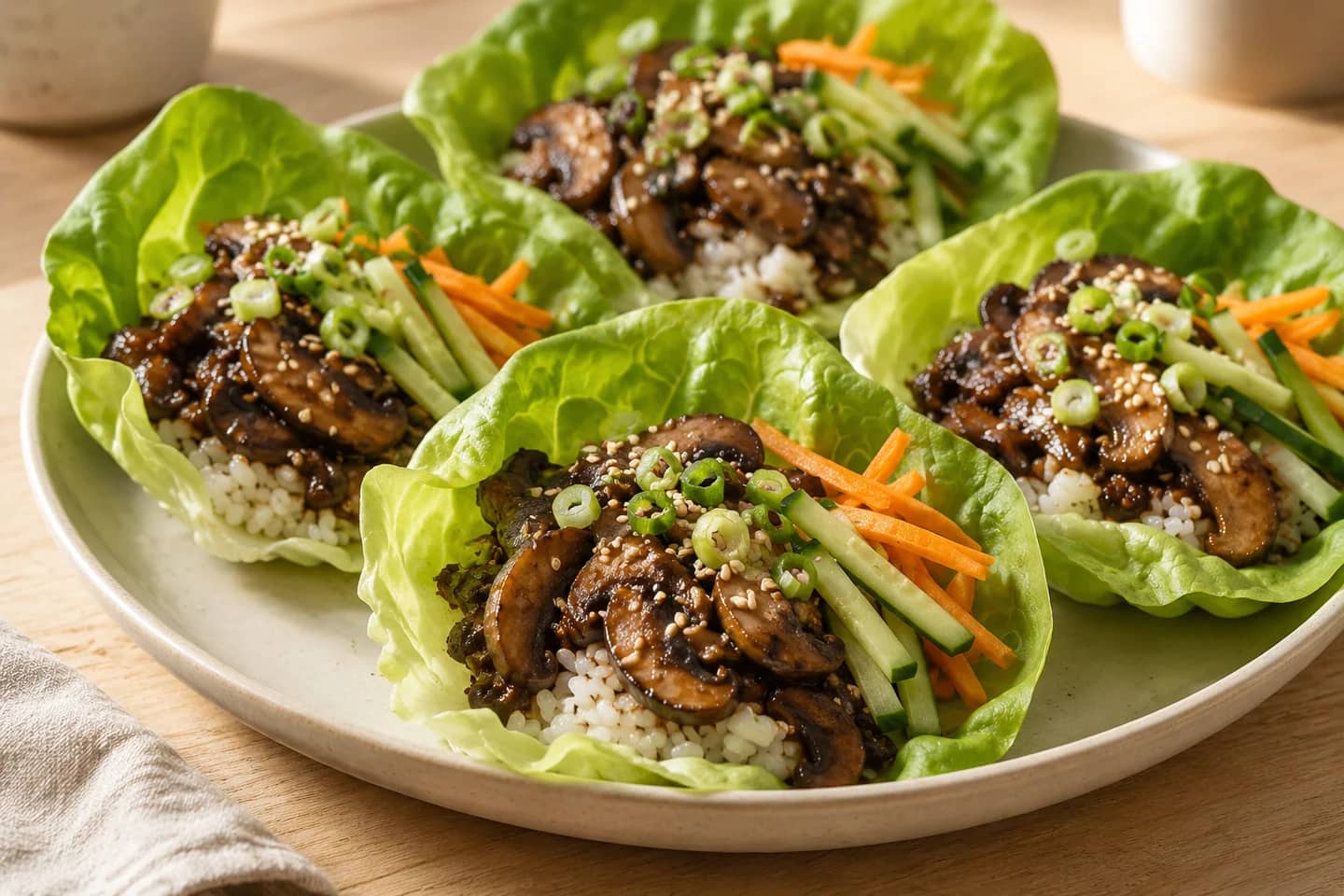
Bulgogi-Style Mushroom Lettuce Cups
Savory-sweet bulgogi mushrooms, crunchy vegetables, and sesame rice tucked into crisp lettuce cups for a fast Korean-inspired meal.
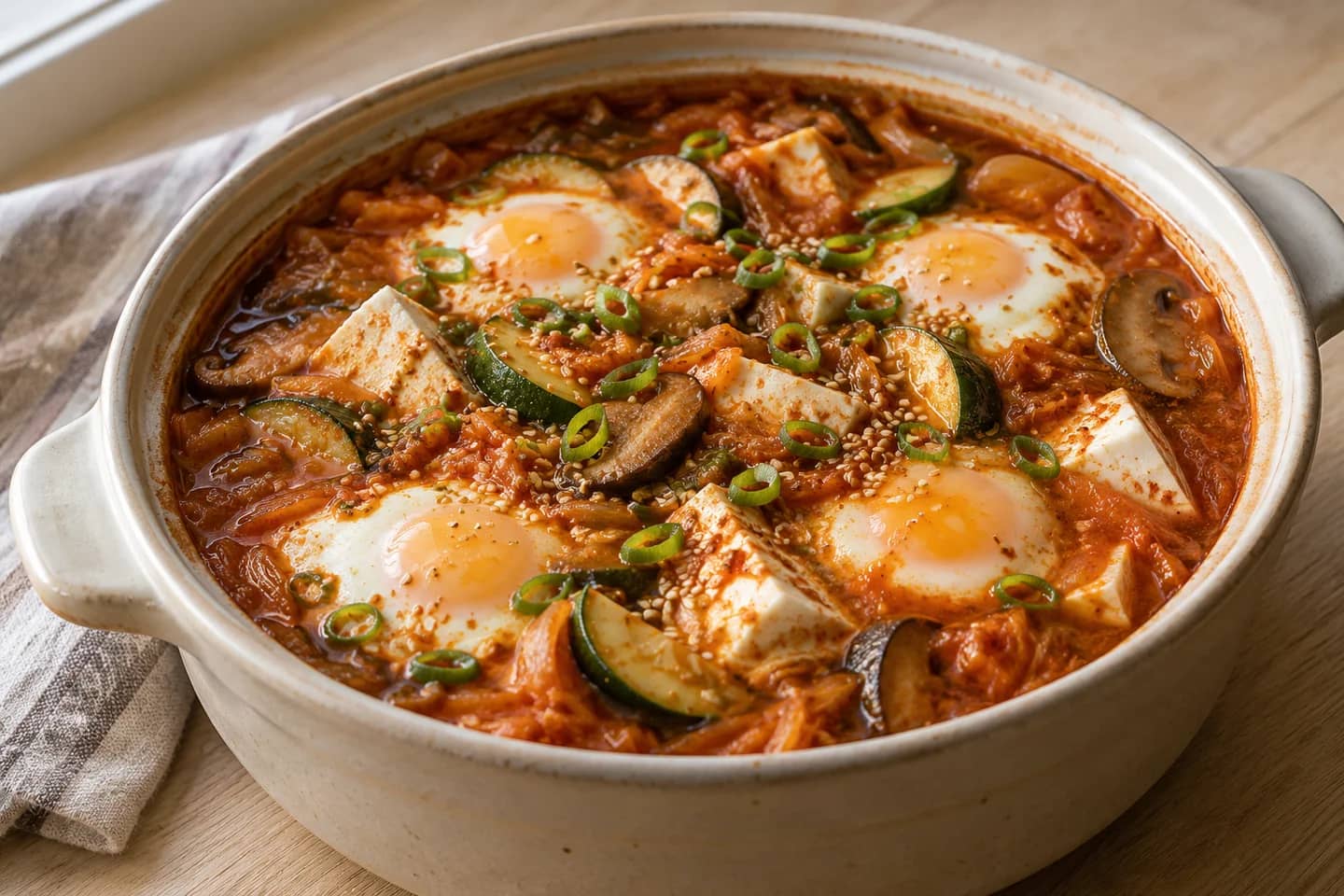
Mushroom-Zucchini Sundubu Jjigae
A cozy Korean soft tofu stew with mushrooms, zucchini, and a spicy-sweet gochujang broth finished with scallions and sesame.
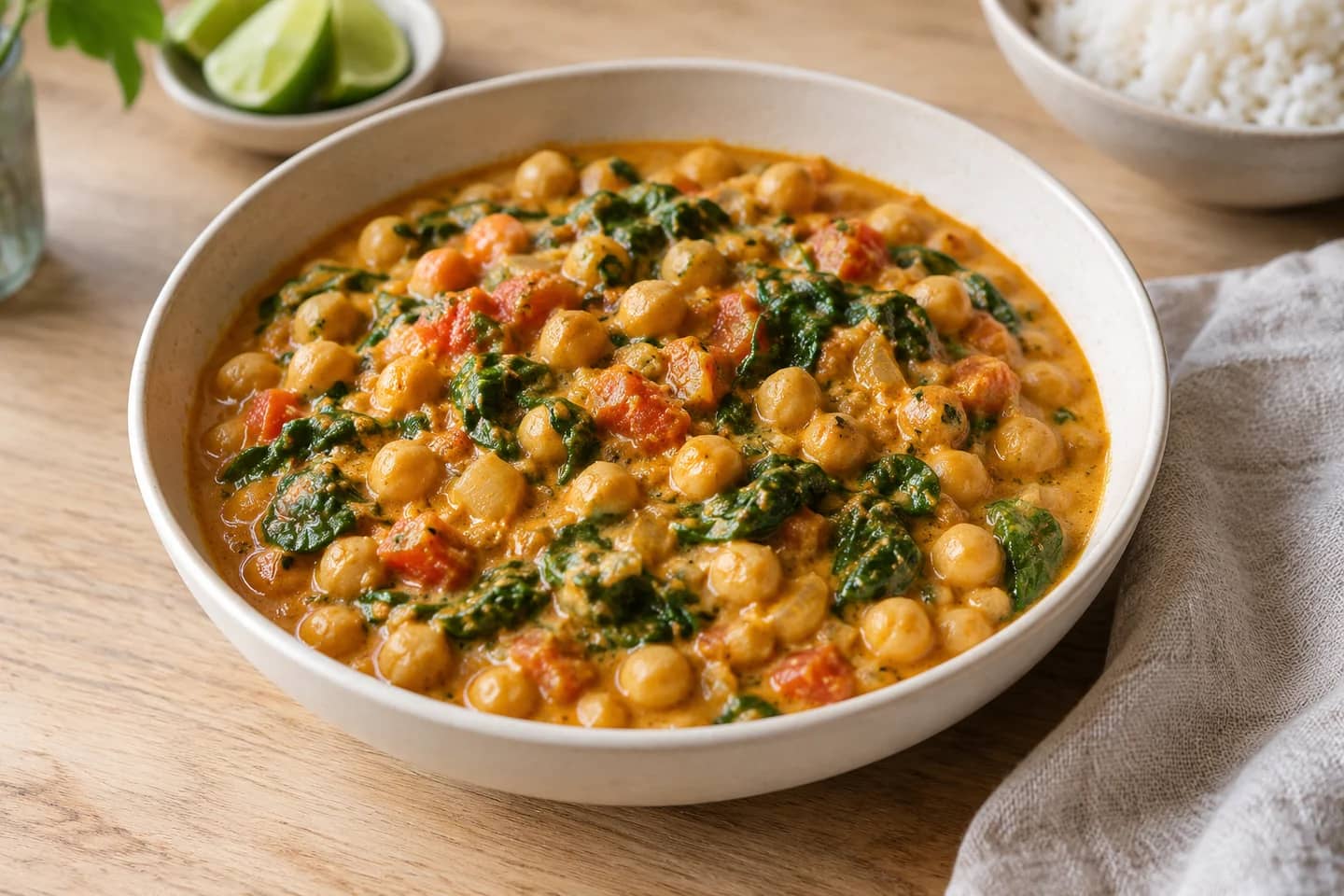
Coconut Chickpea Spinach Curry
Chickpeas and spinach simmer in a creamy tomato-coconut sauce with ginger and curry spices. Finish with lime for a bright, plant-based dinner.