
General adult food guidance using UK references, not diagnosis or treatment of iron deficiency. Individual needs vary. Seek professional advice for symptoms, pregnancy, heavy periods or a diagnosed deficiency. Sources checked 6 October 2026.
What you’ll learn
- Include iron-containing foods such as pulses, nuts and fortified cereals in a varied diet.
- Pair plant iron sources with vitamin C-containing foods and check what a stated portion means.
- Reference intakes describe food intake; they are different from blood-test results or prescribed supplement doses.
Iron deserves attention when planning vegetarian meals, but the first step is practical: identify foods you enjoy that contribute it, then make them part of your usual cooking. A bowl of beans, a lentil dish or a fortified breakfast cereal can play a role without turning every meal into a calculation.
This guide explains UK adult reference intakes, plant-food choices and ways to compose meals. It does not diagnose low iron or promise that a recipe will correct a deficiency. Dietary intake and the amount your body absorbs are related, but they are not the same measurement.
How much iron do adults need?
The NHS iron guidance gives the following UK daily amounts. Its categories are reproduced here so you can see the age ranges and units clearly. These references are for intake from food, not a recommendation to take the same amount as a supplement.
UK adult daily iron references
Scroll across to see all columns.
| NHS population group | Daily iron |
|---|---|
| Men aged 19 and over | 8.7 mg |
| Women aged 19–49 | 14.8 mg |
| Women aged 50 and over | 8.7 mg |
The NHS notes that women who still have periods after 50 may need the amount given for women aged 19–49. Heavy menstrual blood loss can increase the risk of deficiency. Pregnancy, existing deficiency and other individual circumstances require advice appropriate to that person rather than a number copied from a general table.
Choose iron-containing vegetarian foods
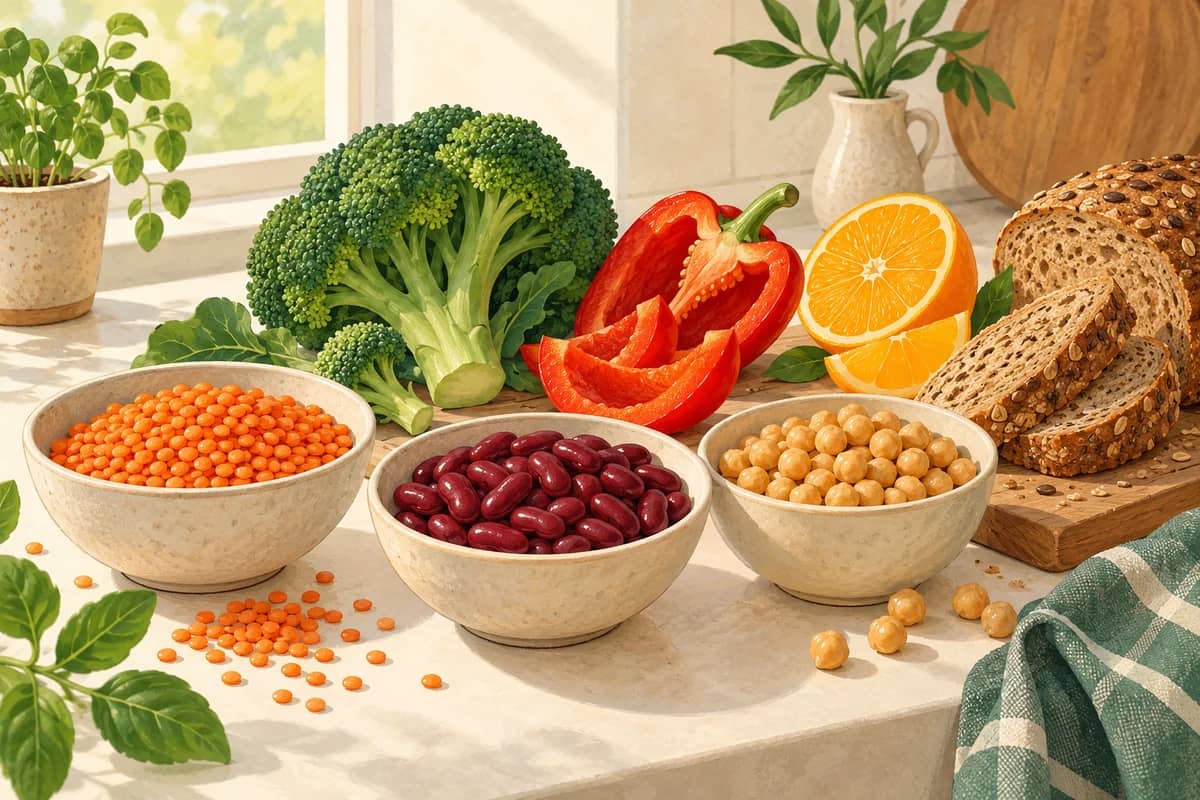
The NHS vegetarian diet guide lists pulses, fortified cereals, nuts, dried fruit, wholemeal bread and flour, and vegetables such as broccoli among vegetarian iron sources. Vary the foods you use rather than depending on one ingredient as the answer.
Ways to bring iron-containing foods into your cooking
Scroll across to see all columns.
| Ingredient group | Practical kitchen use |
|---|---|
| Lentils, beans and chickpeas | Use in stews, dal, curries, wraps and grain bowls. |
| Fortified breakfast cereals | Check the label for added iron and the amount in your actual portion. |
| Nuts and dried fruit | Add suitable amounts to oats or a meal; check allergens and the recipe’s quantities. |
| Wholemeal bread and flour | Use bread with a bean filling or a lentil soup. |
| Broccoli and other suitable greens | Include as part of a varied vegetable selection. |
Help plant iron absorption
Iron from plant foods is less easily absorbed than iron from meat. The NHS vegetarian guidance suggests including vitamin C with the meal to help absorption. For example, serve a bean filling with fresh pepper, or have citrus fruit alongside an appropriate meal.
The NHS vegan guidance also advises avoiding tea or coffee during or after main meals when trying to improve plant iron absorption. You do not need to rebuild the whole menu to begin: identify one meal and consider its food and drink choices together.
A food’s listed iron content is not a prediction of how much you absorb. Do not compare a nutrition-panel amount with a blood-test result, or infer iron status from one day’s menu.
Read portions and labels accurately
Compare information on the same basis. A label showing iron per 100 g is different from one showing iron per serving. Dry lentils, cooked lentils and canned lentils also have different water content, so their weights are not interchangeable for a nutrient estimate.
If a label supplies iron per 100 g, multiply that value by your serving weight divided by 100. As a purely arithmetic example, a hypothetical food with 2 mg per 100 g would provide 3 mg in a 150 g serving. This example is not a nutrient claim about any food or recipe on this site.
For a home-cooked recipe, a documented estimate needs every ingredient, the appropriate food-composition entry and the number of servings. The recipe collection’s existing calorie and macro estimates do not supply verified iron totals, so we have not invented per-recipe iron figures here.
Use these recipes as cooking starting points
Try red lentil dal, chana masala or Greek chickpea cucumber salad. They give you concrete ways to cook pulses. Review their ingredients and serving suggestions, then consider a vitamin C-containing accompaniment if it fits the meal.
These are ingredient-based suggestions, not a guarantee that a serving meets a particular percentage of your iron requirement. Rotate them with other meals using the balanced vegetarian diet guide, which considers the wider pattern of eating.
When food planning needs professional support
If you think you have iron deficiency anaemia, contact a GP rather than self-diagnosing from tiredness or a menu. The NHS anaemia guidance explains that assessment can involve blood tests and investigation of the cause. Treatment may include prescribed iron; a dietary reference intake is not a treatment dose.
Follow the professional advice given for a diagnosed deficiency, including any prescribed supplement instructions. For ordinary food planning, explore the key nutrients guide and vegetarian recipes. Choose one pulse-based meal to add to your routine, then review how it fits with the rest of your week.
Keep exploring
Vegetarian Recipes Kitchen
Our collection focuses on practical vegetarian cooking, measured ingredients, plant-based substitutions, and clear methods. New recipes are editorial drafts; photography may be AI generated. We do not claim hands-on testing unless a recipe explicitly documents it.
View all posts by Vegetarian Recipes Kitchen