
What you’ll learn
- Buy staples around meals you already want to cook, rather than collecting unrelated ingredients.
- Combine a grain, a pulse and a flavourful sauce with fresh or frozen vegetables.
- Keep packet cooking instructions and dates when transferring food to containers.
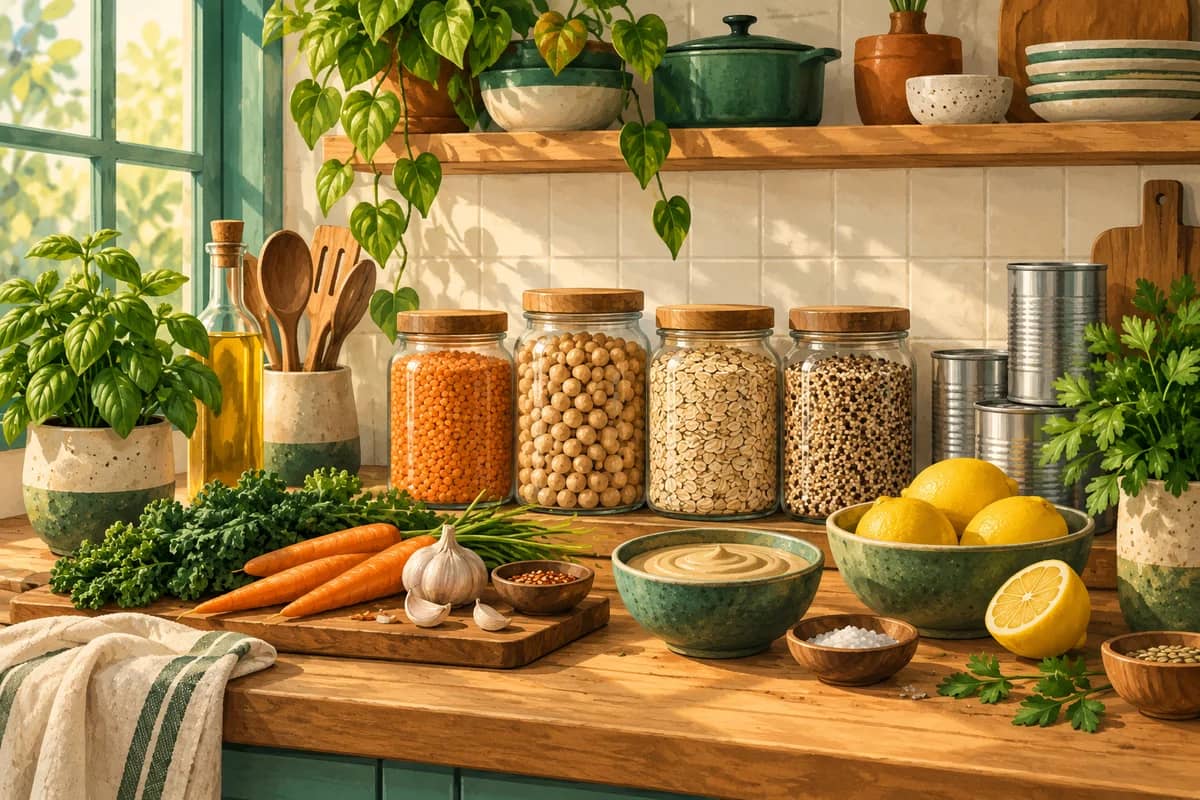
A useful vegetarian pantry is a short collection of ingredients you can combine in different ways. It should make dinner easier without filling the cupboard with things you rarely open. Start with two or three meals, identify what overlaps, and buy enough for those meals before building a larger stock.
Start with one ingredient from each group
A flexible starter cupboard
Scroll across to see all columns.
| Group | Useful choices | What to check |
|---|---|---|
| Grains and starches | Rice, quinoa, oats, pasta or couscous | Packet cooking method and gluten requirements |
| Pulses | Tinned chickpeas, beans and dry red lentils | Drained quantity, added salt and cooking instructions |
| Sauce foundations | Tinned tomatoes, tahini and vegetable stock | Allergens and vegetarian ingredients |
| Flavour | Cumin, smoked paprika, harissa or miso | Heat level, saltiness and label ingredients |
| Fresh finishing ingredients | Lemon, herbs, onions or garlic | How much you can use while fresh |
Choose familiar versions before buying several alternatives. If you cook quinoa twice a week, keep it on hand; if you prefer potatoes, you do not need four grains just for variety. Frozen spinach, peas or broccoli complement cupboard staples, though they belong in the freezer rather than a dry pantry.
Turn a small list into three different meals
Chickpeas, tomatoes and spices can become Chana Masala. Chickpeas with quinoa, vegetables and tahini make Roasted Veggie Buddha Bowls. Red lentils with onion and cumin form Red Lentil Dal. These meals share several ingredients while offering different textures.
Use the written recipes to collect actual quantities. Check whether a pulse weight refers to dry food, cooked food or a drained tin. Those amounts are not interchangeable. A tin’s total weight includes its liquid, and dry lentils absorb water during cooking. Buy against the quantity the method actually needs.
Write your shopping list by ingredient, then add the amounts from each selected recipe. Check the cupboard before shopping so you do not buy a new jar for one spoonful already available at home.
Use sauces without making every meal taste alike
Keep a small range that changes the direction of a meal. Tahini and lemon give a creamy finish; harissa brings heat; miso adds savouriness; a tomato sauce supports beans, pasta or a bake. Add concentrated condiments gradually and taste the combined dish before adding salt.
Check vegetarian and vegan suitability rather than assuming a condiment is plant-based. Some curry pastes, chilli crisps and ready-made sauces contain fish ingredients. Pesto may contain cheese made with animal rennet. Stock cubes, spice blends and soy sauces also need label checks if you avoid gluten or particular allergens.
Organise food so the instructions stay with it
Store dry ingredients somewhere cool and dry, away from steam and direct heat. Close packets securely; a dedicated container is optional. If you decant food, retain its best-before date, allergen information and cooking instructions, especially for grains and dried pulses that look similar.
Put opened packets where you can see them and use older stock first. Avoid topping up a partly used jar indefinitely, which makes dates harder to track. Keep a short note of ingredients that need using rather than hiding them behind fresh purchases. Clean and fully dry containers before refilling.
Cook batches to fit a storage plan
A cupboard full of dry ingredients does not mean every cooked version keeps for a week. Pick portions you can eat soon and freeze suitable extras. Cool and refrigerate cooked food promptly, following each recipe’s note and the Food Standards Agency leftover guidance. Rice needs its own shorter storage plan; use the FSA rice guidance.
Keep sauces and toppings separate when that protects texture. A cooked lentil base can work in two meals, but adding fresh herbs, salad and nuts at serving keeps the meals distinct. Label containers with what they contain and when they were prepared rather than relying on memory.
Pick three meals from the vegetarian recipe collection, total the overlapping ingredients and shop for those. After a week, keep the staples you used often and leave the rest off your next list.
Keep exploring
Vegetarian Recipes Kitchen
Our collection focuses on practical vegetarian cooking, measured ingredients, plant-based substitutions, and clear methods. New recipes are editorial drafts; photography may be AI generated. We do not claim hands-on testing unless a recipe explicitly documents it.
View all posts by Vegetarian Recipes Kitchen