
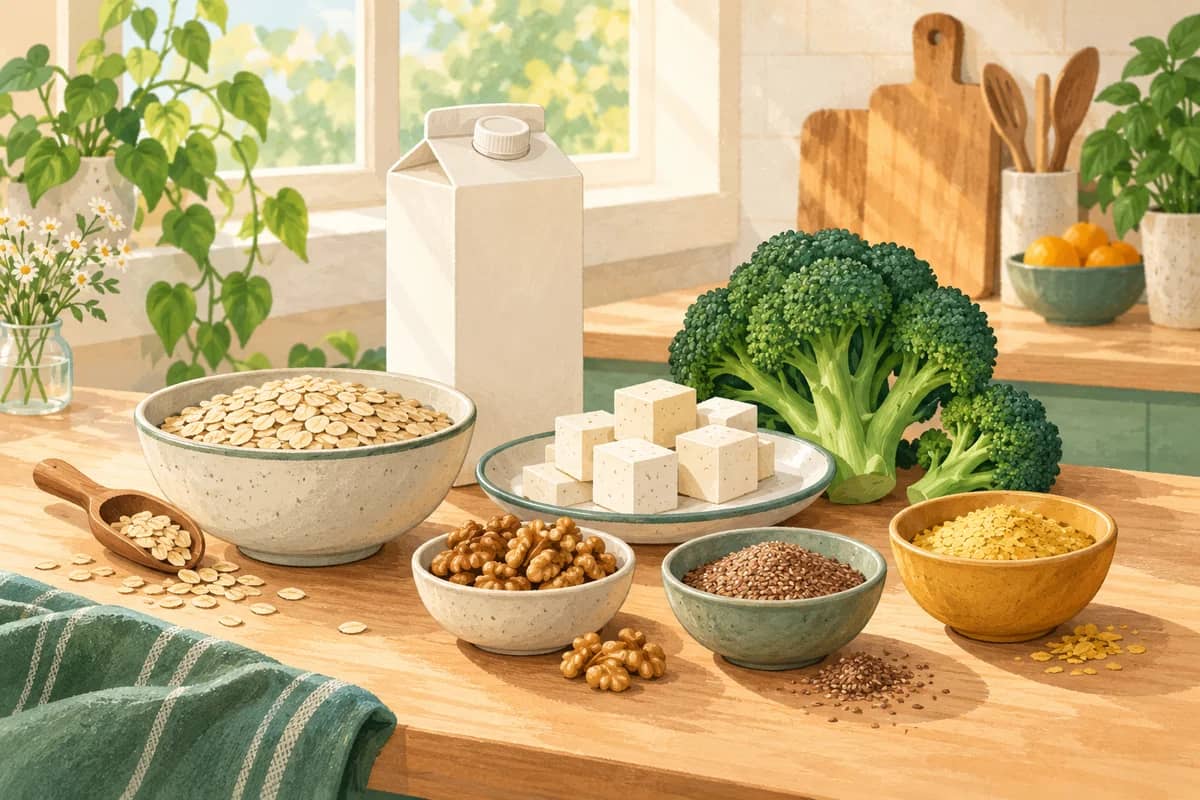
General adult nutrition education based on UK guidance. Reference intakes are not supplement doses or individual treatment advice. Different countries and life stages use different guidance. Sources checked 6 October 2026; no clinical dietitian review is claimed.
What you’ll learn
- Vegan eating needs reliable B12 sources; not every plant drink or nutritional yeast is fortified.
- Check calcium, vitamin D and iodine individually on labels rather than assuming one fortified product supplies all three.
- Include suitable omega-3 foods and seek individual advice when food choices, life stage or health needs make planning difficult.
Choosing vegetarian or vegan meals changes which foods you rely on for particular nutrients. A useful plan starts with the food you actually buy: the drink in your breakfast, the tofu in your dinner and the ingredients used regularly through the week. Small label checks can reveal choices that a diet label alone does not explain.
This guide covers B12, calcium, vitamin D, iodine and omega-3. It accompanies our balanced vegetarian diet guide and iron guide. It is a starting point for general adult food planning, with UK figures labelled so readers elsewhere can consult their local guidance.
UK adult reference intakes at a glance
Reference intake is different from a supplement dose
Scroll across to see all columns.
| Nutrient | UK adult daily reference | Source and scope |
|---|---|---|
| Vitamin B12 | 1.5 micrograms | NHS B vitamins guidance, adults aged 19–64. |
| Calcium | 700 mg | NHS calcium guidance, adults aged 19 and over. |
| Vitamin D | 10 micrograms | NHS vitamin D guidance, adults; seasonal supplement advice is explained below. |
| Iodine | 140 micrograms | NHS iodine guidance, adults. |
Milligrams and micrograms are different units: a milligram contains 1,000 micrograms. Check the unit as well as the number when reading labels. These references summarise general intake guidance; they do not tell you which supplement to choose or how to treat a deficiency.
Vitamin B12: use a reliable source
The NHS B vitamins guidance lists eggs, milk, cheese and some fortified cereals among B12 sources. Fruit, vegetables and grains do not naturally provide a reliable B12 supply. If you avoid animal foods, make a deliberate plan rather than assuming variety alone will cover it.
The BDA plant-based guidance identifies fortified foods and supplements as the reliable sources for vegans. Check plant drinks, cereals and nutritional yeast individually: the presence of B12 in one brand does not establish that another contains it. Appropriate supplement amounts can differ from the dietary reference because absorption and dosing schedules matter.
As a practical first step, find the B12 line on the products you use regularly and note the amount in the portion you consume. If your choices do not provide a dependable pattern, ask a registered dietitian or healthcare professional how to meet your needs. Avoid guessing a treatment dose from the reference table.
Calcium: check the food and the fortification
The NHS calcium guidance lists dairy foods, calcium-fortified soy drinks and greens such as kale among sources. The NHS vegan guidance also includes calcium-set tofu and fortified plant drinks. Spinach contains calcium, but its calcium is not as readily available to the body.
For tofu, check the ingredients and nutrition information rather than assuming every block has the same calcium content. For drinks, compare the stated calcium amount per serving or per 100 ml, then follow the package’s storage and preparation instructions. A product’s usefulness in coffee is a separate question from its nutrient profile.
Try our turmeric tofu scramble as a way to cook tofu, selecting a suitable product for your plan. The recipe is a cooking example; we have not assigned it a calculated percentage of your calcium requirement.
Vitamin D: understand the seasonal advice
The NHS vitamin D guidance advises everyone to consider a daily 10-microgram supplement during UK autumn and winter, when food alone can make it difficult to get enough. Some people need year-round consideration, including those with little sun exposure and people with dark skin; follow the NHS guidance or individual professional advice.
Fortified foods can contribute, but check whether vitamin D is actually listed. If you choose a supplement or fortified product for a vegan diet, verify that it is suitable for vegans. Follow advice specific to your situation if a clinician has recommended a different amount.
Iodine: do not infer it from added calcium
The NHS iodine guidance identifies dairy foods and eggs as vegetarian sources. Some plant drinks contain added iodine, but not all do. Check explicitly for iodine: a carton advertising calcium or B12 fortification does not establish that iodine has been added.
Seaweed is not a simple substitute for a measured, reliable source. The BDA iodine factsheet explains that the amount can vary and some seaweed or kelp can supply excessive iodine. If you avoid dairy and eggs and are unsure how to cover iodine, seek professional advice, particularly with thyroid conditions or pregnancy.
UK and international reference values can differ. The NHS adult iodine figure here is 140 micrograms; the BDA iodine factsheet also presents EFSA guidance. Keep the authority and population attached to the figure instead of mixing references from different systems.
Omega-3: understand the different forms
The BDA omega-3 guide distinguishes ALA, found in plant foods such as walnuts, flaxseed and rapeseed oil, from EPA and DHA. The body converts some ALA into the longer-chain forms, but only small amounts are formed. Those sources should not be treated as nutritionally identical.
Use suitable nuts, seeds and oils within your meals and follow the quantities in recipes. For example, the lentil-walnut bolognese is a way to use walnuts, while oats can be a familiar place for ground seeds. Check allergens and adapt the dish appropriately.
The BDA does not recommend omega-3 supplements routinely for the UK general population. Algae-based products exist for vegetarian and vegan needs, but deciding whether one is appropriate involves more than choosing a product labelled omega-3. Seek individual advice if you are unsure.
A five-minute shopping-label check
Choose two or three products you use most often and read their full panels. Note B12, calcium, vitamin D and iodine separately; record the amount per portion where supplied. Check whether your intended serving matches the manufacturer’s serving, and keep ingredient suitability and nutrition as separate columns in your notes.
Use our egg and dairy substitutions to choose ingredients for cooking, then revisit this guide for their nutritional role. Build a few repeatable meals from the vegan collection, and discuss any unresolved gaps with a qualified professional instead of relying on an unverified sample menu.
Keep exploring
Vegetarian Recipes Kitchen
Our collection focuses on practical vegetarian cooking, measured ingredients, plant-based substitutions, and clear methods. New recipes are editorial drafts; photography may be AI generated. We do not claim hands-on testing unless a recipe explicitly documents it.
View all posts by Vegetarian Recipes Kitchen