
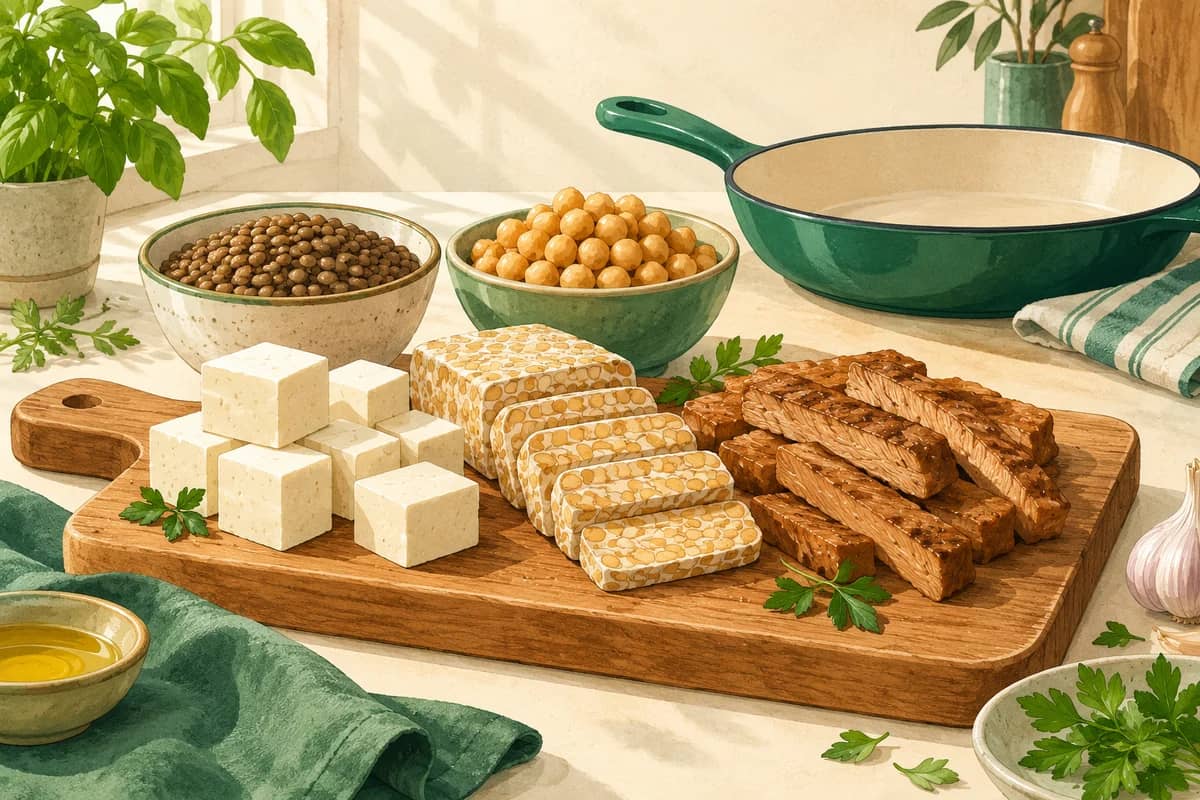
What you’ll learn
- Choose a substitute for the job: crumbles, chewy strips, crisp cubes or a substantial centrepiece.
- Check vegan and allergen labels; products in the same category can have different ingredients.
- Plan flavour, texture and nutrition separately, then follow a recipe designed around the chosen ingredient.
A satisfying meat-free dinner begins with what the ingredient needs to do. Mince makes small savoury pieces, chicken strips give a stir-fry bite, and a roast supplies a centrepiece. One substitute rarely handles every job. Choosing by texture and cooking method gives you a better starting point than replacing meat gram for gram.
This guide compares everyday vegetarian meat alternatives and links to recipes built around them. Keep flavour, texture and nutrition as separate checks: an ingredient can work beautifully in a sauce without supplying the same nutrients as the original meat.
Choose by cooking job
Which vegetarian alternative fits your dinner?
Scroll across to see all columns.
| Cooking job | Starting ingredients | Cooking adjustment |
|---|---|---|
| Mince in a tomato sauce | Brown or green lentils, chopped mushrooms, or vegetarian mince | Cook lentils until tender; brown mushrooms separately before adding liquid. |
| Crisp stir-fry cubes | Firm or extra-firm tofu | Drain as directed, pat dry and leave space in the pan. |
| Chewy glazed strips | Tempeh or seitan | Slice evenly and add sugary sauces near the end to avoid scorching. |
| Curry or stew | Chickpeas, beans, lentils or firm tofu | Use cooked pulses unless the recipe includes their full cooking time. |
| A centrepiece with a crust | A lentil-and-mushroom filling or recipe-specific vegetable roast | Manage filling moisture before wrapping in pastry. |
Tofu and tempeh: choose the right form
Firm tofu for crisp edges
For frying, choose firm tofu rather than the soft silken variety. Drain the block according to its packaging, dry the surface and cut similar-sized pieces. Heat the pan before adding tofu, and give each side time to colour before moving it. A wet sauce added immediately can prevent the crust you were hoping for.
Tofu also works in traybakes, noodle soups and curries. Start with our maple-mustard tofu traybake or crispy tofu peanut noodles. These recipes specify the tofu form, seasoning and cooking sequence instead of asking you to improvise a direct meat swap.
Tempeh for a firmer bite
Tempeh has a compact texture that suits thin slices and small cubes. Preparation instructions differ between brands, so follow the packet before adapting a dish. Slice it evenly, brown it, then coat it with a glaze. Our sesame-ginger tempeh stir-fry gives you a useful introduction.
Lentils, beans and mushrooms: build the sauce
Brown and green lentils keep more shape than red lentils in many sauces. Red lentils are useful when you want them to soften into the liquid. Choose according to the finished texture, and check whether your recipe calls for dried, canned or already cooked pulses.
Mushrooms bring a savoury flavour and browned edges, but a crowded pan can leave them steaming in their own liquid. Chop them for a mince-style filling, cook off excess moisture and combine them with cooked lentils when that suits the recipe. Try lentil-walnut bolognese or mushroom-lentil meatballs.
Texture is one part of the meal. Mushrooms and young jackfruit can imitate particular textures, but do not assume a similar-looking serving has the same protein content. Compare the label or food-composition information and plan the whole plate.
Seitan, mycoprotein and packaged alternatives
Seitan is wheat-based, so it is unsuitable for someone who needs to avoid gluten. Mycoprotein and packaged meat alternatives vary: some contain egg or milk even when they are vegetarian. The British Dietetic Association’s plant-based guide identifies these as useful protein sources and advises checking ingredients and salt and fat content.
Do not apply a meat recipe’s cooking time blindly to a substitute. Some products are ready to heat, while others need thorough cooking from chilled or frozen. Keep the original packaging until you have checked the instructions. For a vegan meal, look for a suitable vegan label as well as reviewing the ingredient list.
Read the label before comparing products
Compare like with like: a cooked serving with a cooked serving, rather than a dry weight against a prepared weight. Check the protein per portion, ingredients and allergens. A marinade or breaded coating changes the composition, so the name on the front is only the beginning of the comparison.
Check sauces and extras too. A plant-based main served with ordinary Worcestershire sauce, non-vegetarian cheese or a fish-containing curry paste may not match the intended diet. Our egg and dairy substitution guide explains some of the surrounding ingredient choices.
Put one alternative into practice
Choose one dinner you already enjoy and identify its main cooking job. Select a linked recipe using the alternative, keep its quantities for the first attempt, and note whether you want a crisp surface, a softer filling or more sauce next time. That gives you a repeatable starting point without changing several things at once.
Browse the vegetarian recipe collection for sauces, curries and traybakes, or use the vegan filter when you are avoiding all animal ingredients. For help composing the rest of the meal, read how to build a balanced vegetarian diet.
From the guide to the kitchen
Recipes for this guide
Choose the texture you want, then follow a recipe written for that ingredient. These dishes put the guide’s tofu, tempeh, pulse and mushroom techniques into practice.
- Maple Mustard Tofu Traybake
Roast firm tofu with a maple-mustard coating for a traybake with browned edges.
- Crispy Tofu Peanut Noodles
Pair crisp tofu pieces with noodles and peanut sauce.
- Sesame Ginger Tempeh Stir-Fry
Use tempeh for a firmer bite in a sesame-ginger stir-fry.
- Lentil Walnut Bolognese
Make a mince-style pasta sauce with lentils and walnuts.
- Mushroom Lentil Meatballs
Combine mushrooms and lentils in a shaped, savoury filling.
- Lentil Mushroom Cottage Pie
Build a lentil-and-mushroom filling beneath a potato topping.
- Smoky Jackfruit Taco Filling
Shred young jackfruit into a smoky tomato filling for tacos.
- Black Bean Sweet Potato Tacos
Use black beans and sweet potato as a taco filling with their own texture.
- Tofu Vegetable Red Curry
Use firm tofu in a vegetable curry rather than making a direct meat swap.
- Bulgogi-Style Mushroom Lettuce Cups
Brown mushrooms for a savoury filling in crisp lettuce cups.
- Porcini Roasted Mushroom Wellington
Turn a mushroom filling into a pastry-wrapped centrepiece.
- Sheet-Pan Tofu Fajita Bowls
Roast tofu and vegetables for fajita-style bowls.
Keep exploring
Vegetarian Recipes Kitchen
Our collection focuses on practical vegetarian cooking, measured ingredients, plant-based substitutions, and clear methods. New recipes are editorial drafts; photography may be AI generated. We do not claim hands-on testing unless a recipe explicitly documents it.
View all posts by Vegetarian Recipes Kitchen