
What you’ll learn
- Choose a few contrasting foods rather than filling every space with a different ingredient.
- Keep dips, allergen-containing foods and crisp items in separate dishes where useful.
- Replenish small chilled portions instead of putting everything out at once.
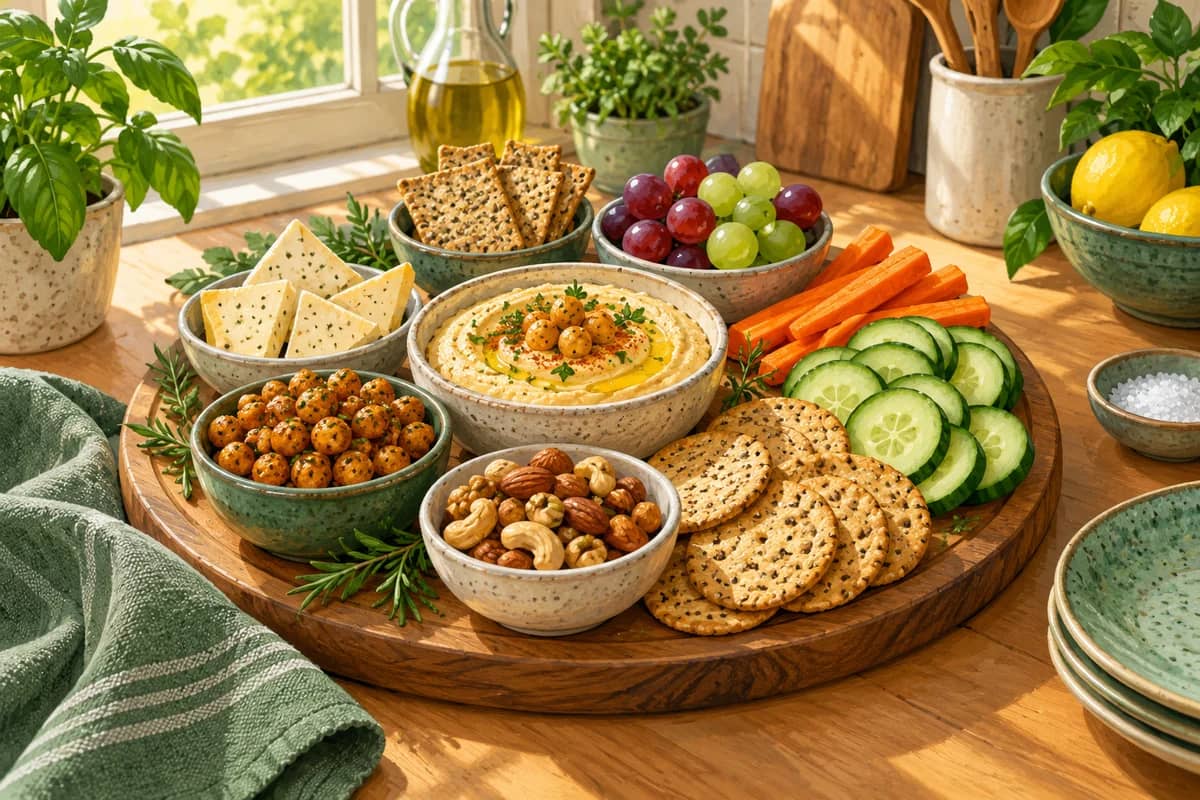
A vegetarian snack board works when guests can build a bite they enjoy. Think about crisp vegetables, a creamy dip, fruit and a few substantial savoury items. You do not need a huge wooden board or every cheese in the shop. A few ordinary platters and bowls can make serving easier and keep different foods distinct.
Choose the board’s job before shopping
Decide whether it is a small snack before dinner, an afternoon spread or a larger meal with bread and substantial fillings. The same arrangement cannot promise suitable portions for all three. Check how many people will eat, what else is being served and which dietary needs you must accommodate.
Build a small set of contrasting components
Scroll across to see all columns.
| Role | Ideas | Serving detail |
|---|---|---|
| Creamy | Hummus, bean dip or a suitable yogurt dip | Serve in a bowl with its own spoon |
| Fresh and crisp | Carrot, cucumber, peppers or radishes | Wash, dry and cut into easy pieces |
| Substantial | Roast chickpeas, vegetarian cheese or cooked falafel | Check labels and serving temperature |
| Sweet | Grapes, berries or sliced seasonal fruit | Keep juicy fruit away from crackers |
| Crunchy | Crackers, toasted bread or nuts | Keep dry; replenish as needed |
Start with one dip and one substantial item, then choose vegetables and a bread or cracker that suit them. Add fruit if you want sweetness. More choice can help a mixed group, but every extra item adds another ingredient label, serving utensil and storage decision.
Use recipes where a written method helps
Lemon-Tahini Hummus gives measured chickpeas, tahini and lemon. Spicy Za’atar Chickpea Mix offers a roast snack, while Maple Rosemary Nuts provide a different sweet-savoury bite. Keep nuts in a separate dish rather than scattering them across every food.
For warm bites, use Broccolini Burrata Crostini and assemble close to serving so the bread stays crisp. If your guests avoid dairy, choose hummus-topped toast or a written vegan recipe instead of assuming that removing cheese leaves the same finished dish.
Plan portions from the recipes and occasion
Use the serving yield of each selected recipe and account for everything else on the table. A recipe serving described as an appetiser differs from a full lunch portion. If you scale several recipes up, total repeated ingredients before shopping so one bag of vegetables is not counted separately for every dish.
Prepare more of the foods your group is likely to eat and fewer decorative extras. Keep backup portions refrigerated or in their appropriate storage until needed. This lets you replenish a small spread while preserving texture rather than placing the whole supply out immediately.
Use small bowls to create separate zones. They stop dips travelling across the board, keep nuts away from other foods and make it easier to replace one item without rebuilding the spread.
Make dietary information easy to use
Ask about requirements when planning and check the actual ingredient labels. Vegetarian cheese needs suitable rennet; vegan dips may still contain sesame, soy or nuts. Crackers can contain wheat, milk or other ingredients. Keep packaging available if a guest needs to check details, and avoid presenting a shared board as allergen-free.
Use separate clean utensils and dishes for foods that need separation, while recognising that this does not establish an allergen-safe environment by itself. For guests with specific requirements, agree on suitable food and preparation before serving rather than improvising a substitute on the board.
Assemble from dry foods to wet foods
Arrange bowls first, then add sturdy vegetables and fruit. Keep bread and crackers dry until the last moment. Spoon dips into their bowls rather than directly onto porous wood. Add warm items just before eating and follow the storage and serving guidance for each food.
Put cold foods out in manageable portions and keep the rest chilled. Follow product use-by dates and the written recipe notes. Freshly cut fruit, dairy dips and cooked foods have different storage needs from sealed crackers; do not store a mixed leftover board as though it were one shelf-stable item.
Choose one dip and one savoury recipe from the vegetarian collection, then add produce and crackers you already enjoy. For a larger celebration, use our entertaining guide to coordinate the snack board with the main meal.
Keep exploring
Vegetarian Recipes Kitchen
Our collection focuses on practical vegetarian cooking, measured ingredients, plant-based substitutions, and clear methods. New recipes are editorial drafts; photography may be AI generated. We do not claim hands-on testing unless a recipe explicitly documents it.
View all posts by Vegetarian Recipes Kitchen