
What you’ll learn
- Prepare components separately so warm grains do not wilt salad or soften toppings.
- Choose a written recipe for quantities, then adjust the packing to how you will eat lunch.
- Plan short refrigerated storage or freeze suitable cooked portions for later.
A make-ahead lunch bowl should still taste appealing when you open it. That often depends more on packing than on an elaborate recipe: keep dressing separate, dry salad leaves, and add crunchy toppings after warming the cooked components. Plan for whether lunch will be eaten cold or reheated before you begin cooking.
Choose a bowl that suits the way you eat lunch
If you have a microwave, a cooked grain, beans or tofu and roasted vegetables can be warmed together, with fresh salad added afterwards. If you eat cold, choose ingredients you enjoy chilled and keep the sauce easy to stir through. Avoid a bowl whose best component needs last-minute frying when your lunch break has no kitchen.
Pack for the serving plan
Scroll across to see all columns.
| Component | How to pack | What to do at lunch |
|---|---|---|
| Cooked grain and protein | Chill promptly in a suitable container | Eat chilled if appropriate or reheat as directed |
| Salad and cucumber | Dry well; keep away from warm ingredients | Add after reheating |
| Dressing | Use a secure small pot | Stir in gradually |
| Nuts and toasted seeds | Keep dry and separate | Scatter on last |
Use one complete recipe as your starting point
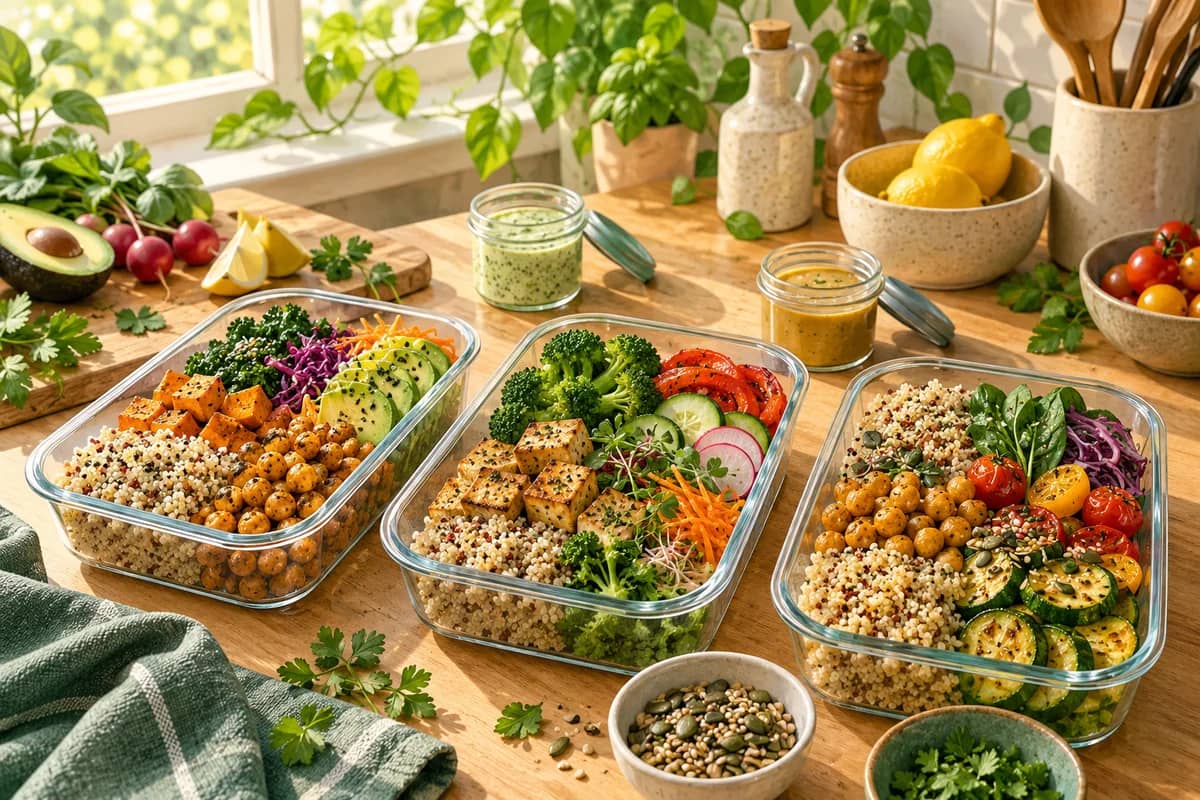
Roasted Veggie Buddha Bowls combine quinoa, chickpeas, vegetables and lemon-tahini dressing. Cook as written first, then divide components into the portions you need. Keep avocado until assembly where practical and add seeds after the dressing so they stay distinct.
Mediterranean Harissa Chickpea Bowls suit a separate raw salad and dressing pot. Grilled Halloumi Grain Bowls work best when you consider that halloumi firms as it cools; if you prefer a softer chilled component, use the stated tofu variation or choose beans.
Scale the recipe for the lunches you actually need. A generous dinner bowl may use a different amount from your packed lunch, but changing the portion also changes its nutrition. Treat any nutrient figures as estimates and use your product labels if you need a more specific calculation.
Prepare without creating a wet container
Spread roasting vegetables with space between pieces and dry canned chickpeas before roasting. Shake cooked grains gently with a fork rather than compressing them into a solid mass. Drain any vegetables or pickles that carry spare liquid. These small jobs prevent water gathering underneath the salad.
Let cooked components cool promptly before combining with delicate raw ingredients. Keep a dressing thick enough to cling, but add water gradually if it needs loosening. A tahini sauce can thicken in the fridge; stir it before packing rather than pouring a stiff lump over the whole bowl.
Pack one spare spoonful of dressing rather than dressing everything heavily in advance. You can add more when needed; you cannot take pooled liquid back out of the grain.
Decide what changes between lunches
Keep the main cooked recipe consistent and vary one finishing element: herbs, a lemon wedge, shredded cabbage or a spoon of suitable chilli sauce. This keeps the shopping list manageable and lets you notice which combination you prefer. New dressings need their own ingredient and allergen checks.
For a vegan bowl, use tofu or pulses and sauces without dairy, eggs or fish ingredients. For gluten-free meals, check grains, stock and condiments rather than only removing bread. Our vegetarian meat alternatives guide helps choose a substitute by texture and cooking role.
Match batch size to safe storage
Follow each recipe’s notes and the Food Standards Agency leftover guidance. Freeze suitable portions for later instead of keeping every lunch in the fridge for a whole week. Rice needs a shorter storage plan; follow the FSA rice guidance. Label the date cooked so reheating does not erase the original storage history.
Keep lunch chilled during transport and use a suitable container for the heating method. Move salad and dressing aside before warming the cooked base. Reheat only the amount you intend to eat, then add fresh ingredients. Follow manufacturer guidance for lids and containers rather than assuming every plastic tub is microwave-safe.
Choose one meal-prep recipe for your next two lunches. Cook, chill and pack its components separately, then note what stayed crisp and what you would change before making a larger batch.
Keep exploring
Vegetarian Recipes Kitchen
Our collection focuses on practical vegetarian cooking, measured ingredients, plant-based substitutions, and clear methods. New recipes are editorial drafts; photography may be AI generated. We do not claim hands-on testing unless a recipe explicitly documents it.
View all posts by Vegetarian Recipes Kitchen