
What you’ll learn
- Use a written method and safety instructions for your exact pressure-cooker model.
- Cook delicate vegetables and crisp toppings separately when texture matters.
- The linked recipes are stovetop or oven alternatives, not tested pressure-cooker conversions.
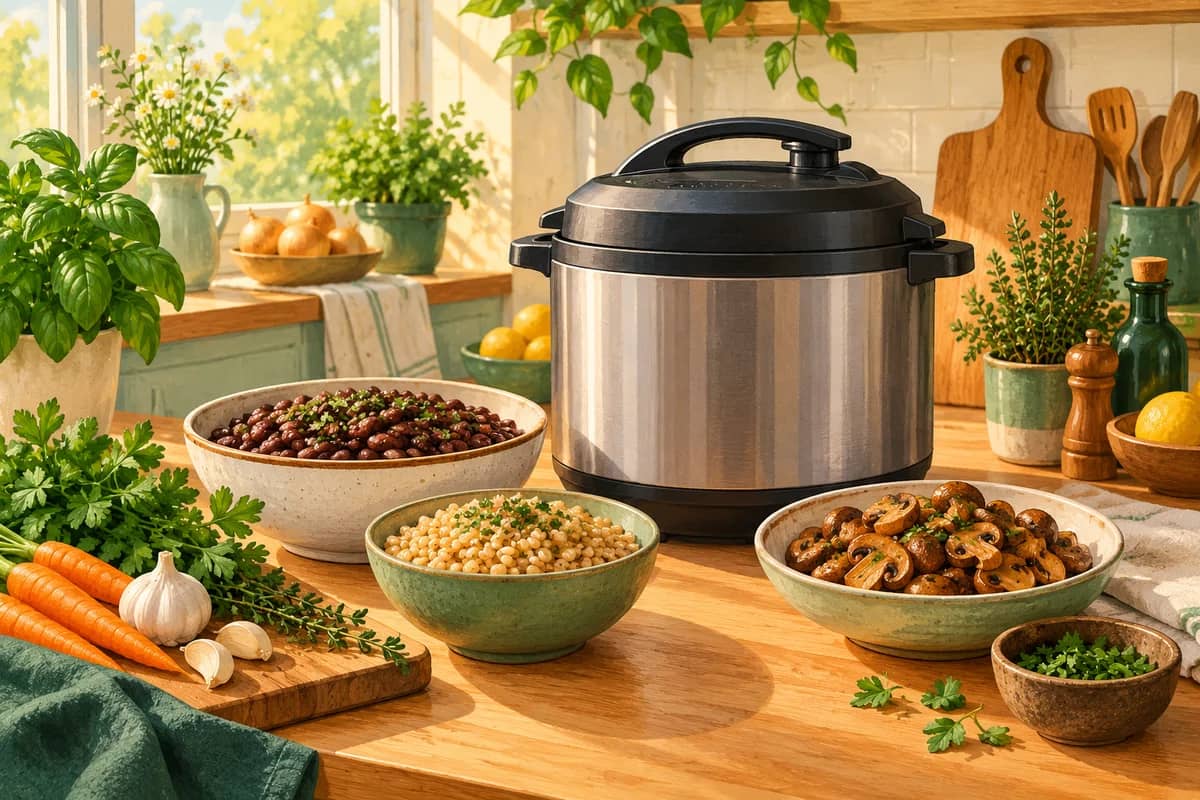
An electric pressure cooker can help prepare beans, sturdy grains and soups for vegetarian meals. It does not need to cook every component. Keep some browned vegetables, raw toppings and fresh herbs outside the pot, and the finished dish can have much more texture than a single soft mixture.
Start with the method for your actual appliance
Use a recipe written for your model and check its manual before beginning. Minimum liquid, fill limits, functions and release instructions can differ. Do not copy a stovetop time into a pressure-cooker setting or assume a sauce has enough liquid because it looks wet. Thick ingredients behave differently from a measured cooking liquid.
The Instant Pot guidance and manual links explain release methods, including natural release for high-starch or high-liquid foods such as beans and soups. Follow the recipe and your appliance instructions. Allow the cooker to depressurise as directed; never force the lid open.
Pressure cooking has three time commitments: heating, cooking under pressure and release. Include all three when deciding whether a meal fits your evening, rather than counting only the programmed minutes.
Give different textures different cooking jobs
Keep some components outside the pot
Scroll across to see all columns.
| Component | Useful approach | Finish at serving |
|---|---|---|
| Beans or sturdy grains | Use an appliance-specific written method | Taste and season once cooking is complete |
| Mushrooms or roast vegetables | Brown in a pan or on a separate tray | Fold through gently or place on top |
| Delicate greens | Add according to the written method near the finish | Keep enough texture for the dish |
| Seeds, nuts and salad | Keep dry or chilled separately | Add after the hot base is plated |
This is particularly useful for a grain bowl. A pressure-cooked base can be soft and warm while cucumber stays crisp, roasted broccoli keeps browned edges and dressing supplies acidity. If the appliance is already in use, prepare the fresh components while it cooks without rushing the release step.
Build five meals from cooked components
For a black bean bowl, prepare beans using a suitable appliance recipe, then add avocado, tomato, lime and herbs. Smoky Chipotle Black Bean Stew is a complete stovetop alternative with measured quantities; its timing and method should not be treated as a pressure-cooker conversion.
Use cooked chickpeas in Mediterranean Harissa Chickpea Bowls. The linked recipe uses an oven to crisp its chickpeas, so keep that stage when you want browned edges. Pressure cooking a chickpea does not produce the same dry, roasted surface.
Cook barley or rice with a model-specific method, then add mushrooms browned separately. Miso Mushroom Rice Bowls offer a complete stovetop version. Its sauce and fresh vegetables can inspire the finish, while the cooker’s grain method remains a separate instruction set.
A lentil soup can take fresh spinach at the end if its written method allows it. For an oven-free stovetop meal, use Golden Turmeric Coconut Lentil Stew. Keep lime and fresh herbs for the finish rather than trying to preserve their freshness under pressure.
Finally, pair cooked quinoa with a tray of roast vegetables and tahini dressing. Roasted Veggie Buddha Bowls show measured components and assembly. This approach gives the appliance one clearly defined task while the vegetables roast separately.
Troubleshoot without guessing new pressure settings
If food catches during a sauté stage, stop and follow the recipe’s deglazing instruction before sealing. If a cooker reports a warning, consult the manual rather than repeatedly restarting it. Check the sealing parts and lid as instructed, and keep the appliance clean according to its manufacturer guidance.
If the cooked component is softer than you wanted, use a firmer topping or turn it into a soup or mash. For the next batch, choose a written recipe for the texture you need. Avoid changing several quantities and settings at once, which makes the cause difficult to understand.
Choose the meal before choosing a new cooker
A pressure cooker is optional equipment, not a requirement for vegetarian cooking. If you already own one, compare these meal ideas with its recipe collection. If you do not, start with the linked stovetop recipes; they can answer the same dinner problem without buying another appliance.
Choose one meal from the recipe collection and decide which component your existing cooker can prepare using a suitable method. Keep the remaining parts simple and follow their own storage instructions after cooking.
Keep exploring
Vegetarian Recipes Kitchen
Our collection focuses on practical vegetarian cooking, measured ingredients, plant-based substitutions, and clear methods. New recipes are editorial drafts; photography may be AI generated. We do not claim hands-on testing unless a recipe explicitly documents it.
View all posts by Vegetarian Recipes Kitchen