
What you’ll learn
- Choose one main centrepiece and a small number of sides with different textures.
- Work backwards from serving time, allowing for oven settings, chilling and resting.
- Prepare components ahead only when their recipe and storage guidance allow it.
A vegetarian celebration does not need several competing centrepieces. Choose one dish that deserves the oven space, add a fresh or crisp side and finish with a dessert you can prepare in advance. A written schedule helps more than an ambitious menu: it tells you which jobs can wait and which need your attention just before serving.
Choose one centrepiece and build around it
Three menu directions
Scroll across to see all columns.
| Main dish | Useful side | Planning point |
|---|---|---|
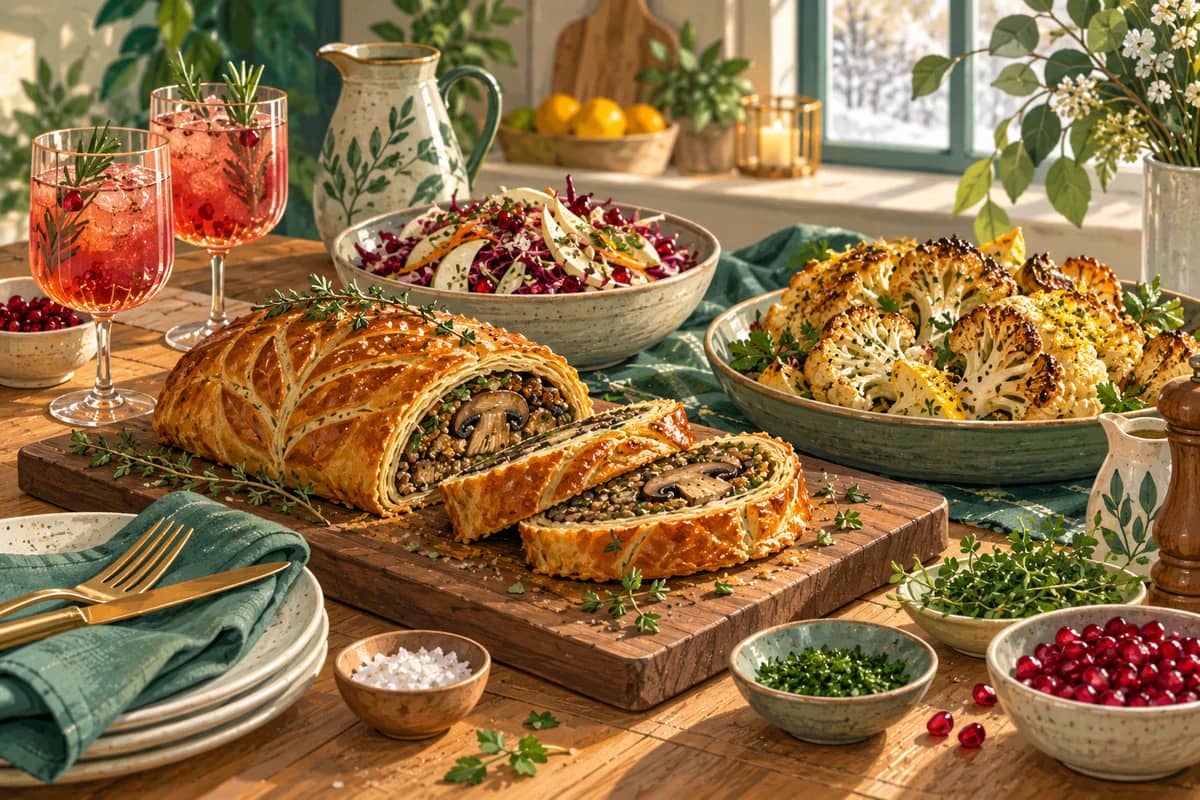
| Mushroom Wellington | Winter Slaw | Cool filling before pastry assembly; leave room for chilling |
| Lentil Shepherd’s Pie | Steamed greens or a fresh salad | Finish lentils before topping; allow the baked pie to rest |
| Roast Cauliflower Crown | Potatoes and a simple vegetable side | Test the central stem and warm gravy separately |
Read the yields and decide whether the centrepiece provides everyone’s main portion or is part of a wider spread. Scale measured ingredients for your guest count, then check that the dish still fits the specified pan. A deeper or much larger bake may need a different cooking assessment even when the ingredient arithmetic is correct.
Check dietary needs before finalising the menu
Ask guests about requirements and plan suitable dishes from the beginning. Vegetarian and vegan are different restrictions, and neither establishes allergen safety. Pastry, stock, cheese, sauces and wine can need label checks. Keep original packaging for guests who need ingredient information.
Use a complete vegan variation when the recipe supplies one, or choose a vegan recipe. Do not rely on simply removing eggs from a custard or cheese from a filling without checking how the dish works. Our egg and dairy substitution guide explains why ingredient function matters.
Write the oven schedule backwards
Start with the time you want to serve the main meal. Note each dish’s oven temperature, baking time and rest. Include preheating, assembly, any pastry chilling and the time needed to get a refrigerated dish hot in the centre. Keep one clear task list instead of trying to remember every recipe independently.
Avoid planning two dishes that both need the same shelf and different temperatures at the last minute. Choose a stovetop side, a raw slaw or a dessert already chilling when the main uses the oven. If two trays must share space, follow their recipes and check doneness rather than assuming they finish unchanged.
Put the dish name, oven setting and serving time on one sheet. Add a separate line for garnish and serving utensils so a finished main does not wait while you hunt for a platter.
Prepare components ahead with a clear boundary
Make a shopping list from the actual recipe ingredients, then check what can be prepared without harming texture. A mushroom filling can be cooked and cooled as the recipe directs; a slaw can have vegetables and dressing held separately; nuts can be prepared with their storage notes in mind. Pastry and crisp bread benefit from later assembly.
For dessert, Chocolate Pots de Crème require their cooling and chilling stages. Orange Cardamom Pavlova lets you keep the dry shell separate from cream and fruit. Check the full total time before deciding that a dessert is a quick job.
Keep serving simple and responsive
Choose a snack guests can eat while you finish cooking, such as a small vegetarian snack board. Offer drinks that suit your guests; Rosemary Pomegranate Punch has an alcohol-free option, with bubbles added close to serving.
Warm gravy separately, add fresh herbs near the end and let bakes rest when directed. Serve dressings or stronger sauces alongside when guests have different preferences. Reserve a few clean containers before the meal so appropriate leftovers can be packed promptly instead of sitting while everything is washed.
Make the next celebration easier
Afterwards, record which dishes competed for oven space and which portions were left. Keep the combinations that worked for your table and simplify the awkward parts next time. Follow each recipe’s storage note, freezing suitable extras; a celebration meal does not give leftovers a longer refrigerator life.
Choose a centrepiece from vegetarian comfort food, then write its preparation schedule before adding sides. A clear plan gives you room to enjoy the meal as well as cook it.
Keep exploring
Vegetarian Recipes Kitchen
Our collection focuses on practical vegetarian cooking, measured ingredients, plant-based substitutions, and clear methods. New recipes are editorial drafts; photography may be AI generated. We do not claim hands-on testing unless a recipe explicitly documents it.
View all posts by Vegetarian Recipes Kitchen