
What you’ll learn
- Use the linked recipes to calculate quantities for your household; this is a flexible menu, not a fixed nutrition plan.
- Check gluten-free labels on sauces, stock and packaged ingredients, as well as grains.
- Freeze suitable later-week portions rather than keeping every cooked meal refrigerated until Friday.
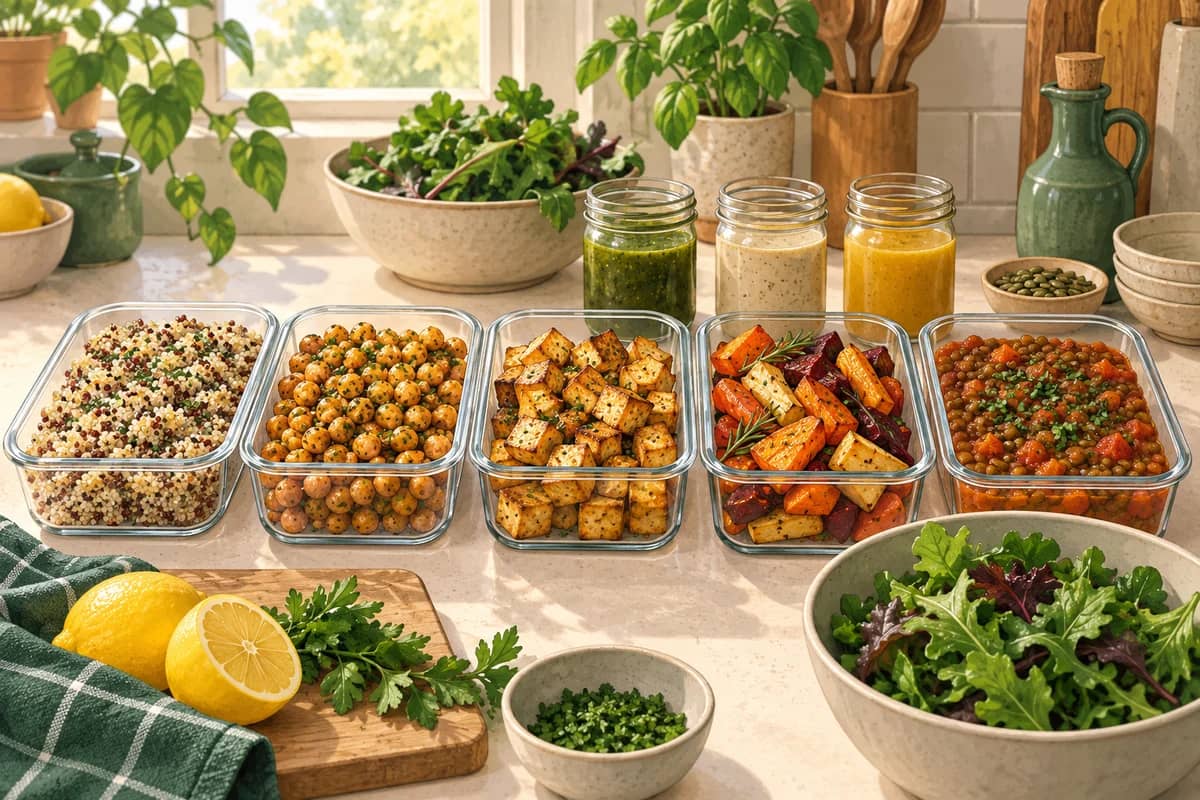
A gluten-free vegetarian meal-prep plan needs two things: meals you want to eat and a storage schedule that fits them. Quinoa, pulses, vegetables and sauces can overlap across several lunches, but a shared ingredient list does not automatically make every packaged version gluten-free. Use the measured recipes and check your actual products.
Choose the menu before calculating the shop
Five lunch directions
Scroll across to see all columns.
| Day | Recipe starting point | Preparation decision |
|---|---|---|
| Monday | Harissa Chickpea Bowls | Keep salad and tahini dressing separate |
| Tuesday | Root Vegetable Quinoa | Add fresh mint and nuts at serving |
| Wednesday | Tamarind Tofu Lettuce Cups | Prepare lettuce fresh; warm tofu separately |
| Thursday | Sunchoke Latkes | Freeze suitable cooked portions or cook them later |
| Friday | Coconut Lentil Stew | Freeze a portion promptly for later in the week |
This menu is a starting point, not a promise that five complete recipes can be cooked in two hours. Pick the lunches you need and check their yields. If one recipe makes four servings and you need two, use the scaling control and read the adjusted ingredient amounts before shopping.
Build a shopping list from actual recipe quantities
Group your list into grains and pulses, vegetables, chilled ingredients, condiments and toppings. Add together repeated ingredients such as quinoa, chickpeas, lemon and tahini. Note whether weights are dry, cooked or drained. A can’s stated total weight includes liquid, so check its drained weight against the recipe.
For a smaller household, choose two recipes that share ingredients and repeat them with different fresh toppings. Five different lunches can create more shopping and washing than you want. Leave optional garnishes off the list when you already have something suitable, but do not silently omit ingredients essential to a sauce or batter.
Keep the recipe list beside the shopping list. If an ingredient changes, check every meal using it rather than assuming the substitution behaves the same in a stew, a dressing and a fried patty.
Check gluten-free status beyond the main grain
Rice and quinoa provide useful grain options; ordinary barley, bulgur and wheat pasta contain gluten. Packaged stock, spice blends, harissa, tamari, tempeh and prepared sauces need their own label checks. Use products labelled gluten-free where the recipes require them, and do not assume all soba noodles contain only buckwheat.
Check ingredient changes each time you buy, and keep food and equipment appropriate to the needs of your household. Vegetarian or vegan labels describe different restrictions from gluten-free labels. A dairy-free pesto may still contain nuts; a gluten-free sauce may still contain soy or sesame.
Arrange preparation by the slowest job
Read the chosen methods and begin any oven preheating or long cooking first. Prepare the roasting tray, start the grain, then make a dressing while those cook. Prepare tofu only when you have space to dry and cook it properly. You do not need an Instant Pot to make this plan; use the saucepan methods in the linked recipes.
Cool cooked components promptly and pack them into suitable containers. Keep raw salad, dressing, toasted toppings and hot food separate where possible. Label each container with the dish and preparation date, and mark which portions are for the freezer. Avoid making one large warm container that cools slowly.
Give later-week lunches a freezer plan
Follow the Food Standards Agency leftover guidance: ordinary cooked leftovers need prompt chilling and use within 48 hours or freezing. Rice has a shorter refrigerated limit; use the FSA rice guidance. A Friday meal prepared on Sunday should not simply wait in the fridge all week.
Freeze suitable stew portions promptly and defrost in the fridge before reheating. Keep lettuce cups and fresh herbs for later preparation because freezing changes their texture. Pack lunch so it stays chilled during transport and follow the reheating notes for its cooked components. Reheat only what you intend to eat.
Adjust after the first week
Notice which meals travelled well and which needed too many last-minute jobs. A bowl with separate dressing may suit work better than lettuce cups that need assembly. Keep the flavour you liked, then simplify the container arrangement or fresh garnish for the next batch.
Start with two meals from the meal-prep collection. Calculate their quantities, check the gluten-free ingredients and write the chilling or freezing plan before cooking. Expand the menu once that routine works for you.
Keep exploring
Vegetarian Recipes Kitchen
Our collection focuses on practical vegetarian cooking, measured ingredients, plant-based substitutions, and clear methods. New recipes are editorial drafts; photography may be AI generated. We do not claim hands-on testing unless a recipe explicitly documents it.
View all posts by Vegetarian Recipes Kitchen