
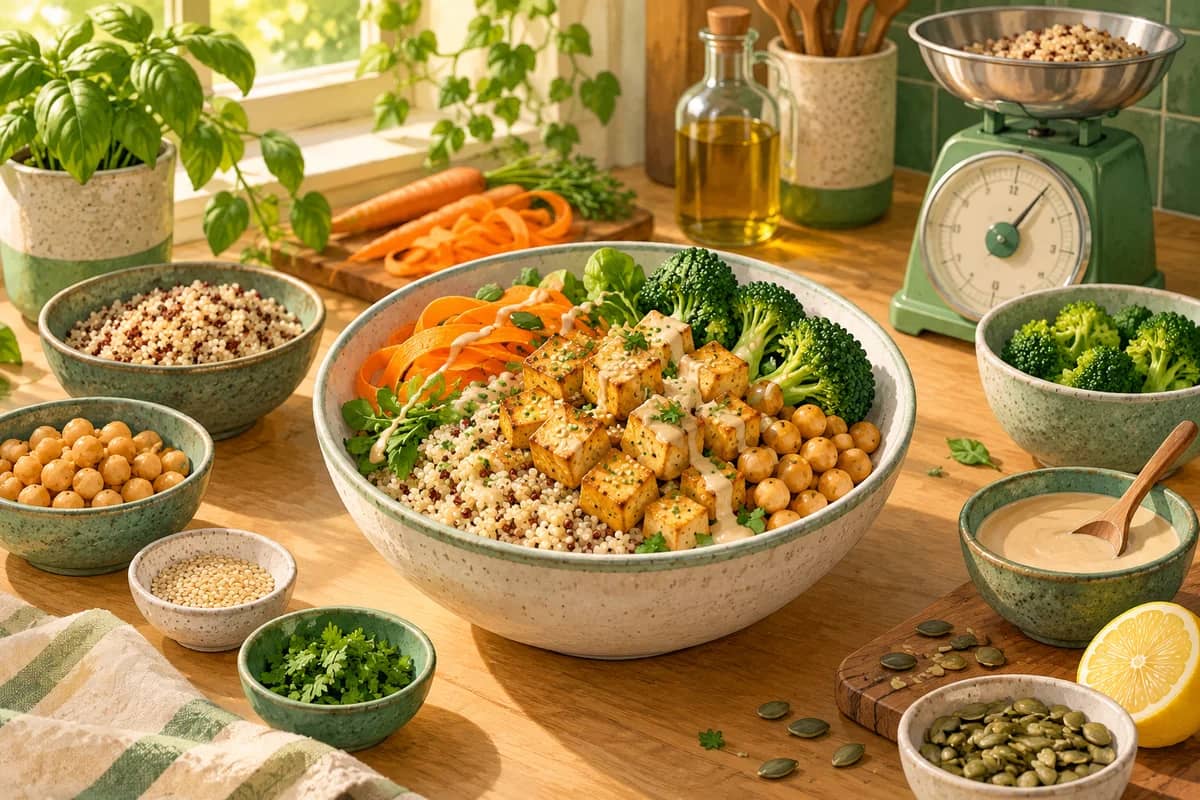
What you’ll learn
- Choose a substantial protein ingredient before adding grains, vegetables and sauce.
- Use product labels and actual portions to calculate protein; a bowl template cannot promise a fixed amount.
- Keep crisp toppings and dressing separate when preparing components ahead.
A good vegetarian bowl starts with a few clear decisions: what provides the main protein, what makes the meal substantial, and what gives each bite texture. Tofu, beans, lentils, tempeh, eggs and dairy can all play a part. You do not need to put every option into one bowl. Choose a combination you enjoy and build around it.
Choose the protein component first
Begin with an ingredient you can portion easily. Firm tofu works well when browned, beans are convenient when drained from a tin, and cooked lentils mix neatly with roasted vegetables. Vegetarian halloumi or cottage cheese suit a dairy-based bowl. Check labels on prepared tofu, sauces and cheese, including vegetarian suitability and allergens.
Match the ingredient to the bowl
Scroll across to see all columns.
| Main component | Useful preparation | Pair it with |
|---|---|---|
| Firm tofu | Dry the surface and brown in a wide pan | Rice or quinoa, cabbage and a citrus sauce |
| Chickpeas or lentils | Drain well; season while warm | Roast roots, leafy greens and tahini |
| Tempeh | Slice evenly and glaze near the end | Broccolini, cucumber and miso dressing |
| Vegetarian halloumi | Cook close to serving | Quinoa, peppers and fresh herbs |
Nuts and seeds bring crunch and contribute nutrients, but a scattering is a different portion from a substantial serving of tofu or beans. Treat toppings as finishing ingredients rather than assuming they replace the main component. For the wider food-group picture, read our balanced vegetarian diet guide.
Add a base and vegetables that suit each other
Choose rice, quinoa, barley, noodles or potatoes according to the dish and your dietary needs. Follow the written recipe or packet for cooking liquid and time: these ingredients are not interchangeable using one universal ratio. If you need gluten-free grains, quinoa and rice are useful options; barley and ordinary wheat noodles contain gluten.
Combine one cooked vegetable with something fresh. Roasted broccoli and raw carrot, warm squash and shredded cabbage, or mushrooms and cucumber give distinct textures without a long preparation list. Dry washed leaves and drain roasted vegetables before packing. Excess moisture softens both the grain and the toppings.
Use a sauce to connect the components
A sauce should coat the food rather than drown it. Tahini with lemon suits chickpeas and roast vegetables; chimichurri brings herbs and acidity to grilled halloumi; a miso-citrus glaze complements tempeh. Add liquid gradually and taste with a bite of the bowl, because the sauce may seem stronger on its own.
Keep one crunchy element for the finish. Add toasted seeds, cabbage ribbons or nuts after warming the cooked ingredients, rather than mixing everything before storage.
The Roasted Veggie Buddha Bowl gives measured quinoa, chickpeas, vegetables and tahini dressing. For another direction, use the Yuzu-Miso Tempeh Bowl. These complete recipes are a better starting point than an improvised bowl when you want repeatable quantities.
Calculate protein from the portion you actually use
This framework does not promise a fixed protein total. Brands, serving sizes and substitutions change the result. Use the nutrition panel for each ingredient, multiply its protein per 100 g by the grams you use, then divide by 100. Add the ingredient amounts and divide by the number of servings.
For example, a hypothetical tofu label showing 12 g protein per 100 g gives 18 g for 150 g of that tofu. That is an arithmetic example, not a value for every tofu brand or a recommendation for how much you should eat. Include the grain, beans and other ingredients when calculating the whole bowl.
Prepare components ahead, then assemble
Pack the cooked base and protein separately from salad, sauce and toppings. Let a warm component stop steaming before it goes beside delicate leaves, while still cooling and refrigerating food promptly. Keep avocado whole until needed where practical, or add it just before serving.
Use each recipe’s storage note. Rice needs particular cooling and reheating care; follow the FSA rice guidance. Start with two bowls you will eat soon rather than filling a whole week’s containers without a storage plan.
Choose one vegetarian bowl recipe and cook it as written first. Next time, change one vegetable or topping while keeping the main method, and use our make-ahead lunch guide to organise the components.
Keep exploring
Vegetarian Recipes Kitchen
Our collection focuses on practical vegetarian cooking, measured ingredients, plant-based substitutions, and clear methods. New recipes are editorial drafts; photography may be AI generated. We do not claim hands-on testing unless a recipe explicitly documents it.
View all posts by Vegetarian Recipes Kitchen